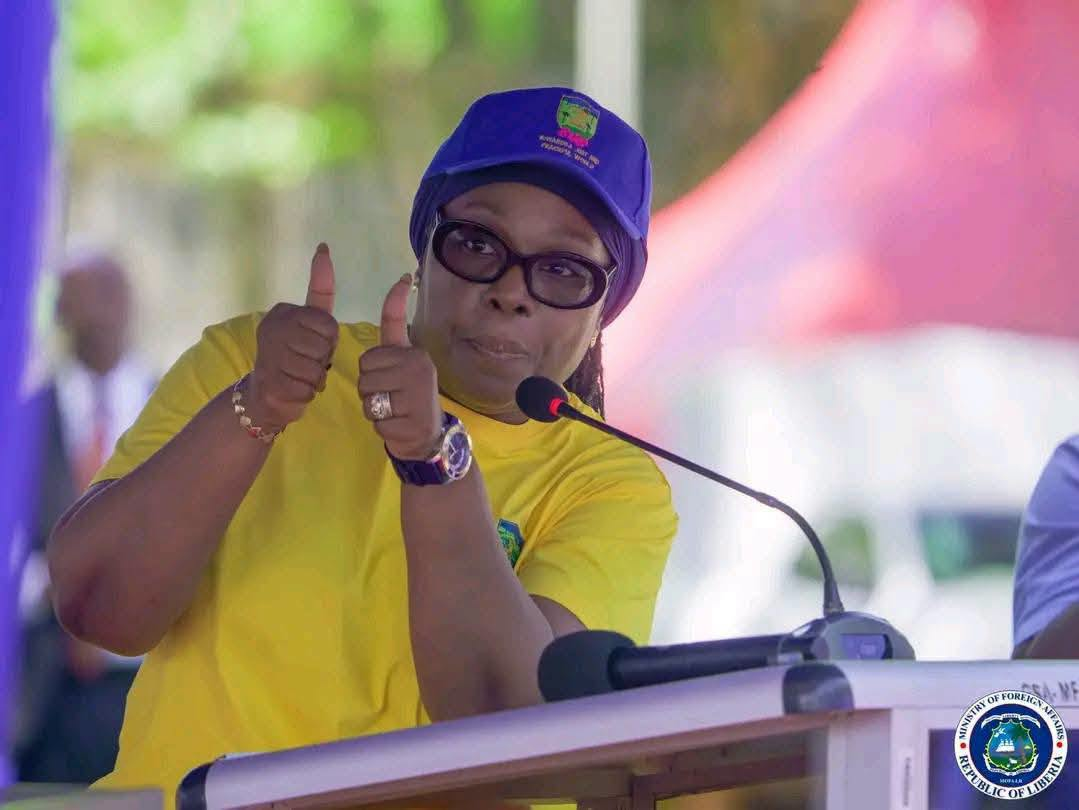
MONROVIA: President Joseph Nyuma Boakai, Sr., has intimated that Liberia will approach its upcoming presidency of the United Nations Security Council with humility, responsibility, and a stronger voice, drawing on the country’s experience in overcoming civil conflict, advancing reconciliation, and promoting post-war peacebuilding to contribute to international peace and security.
The President made the statement during the celebration of the 81st anniversary of the United Nations, held at the Ministry of Foreign Affairs on Monday, October 26, 2026.
This year’s celebration was held under the theme, “Liberia on the UN Security Council: From Sustaining Peace at Home to Advancing Peace and Security Globally.”
In early December this year, Liberia assumes the rotating presidency of the 15-member Security Council, marking a significant milestone in the country’s diplomatic history.
The Liberian Leader described Liberia’s election to the Security Council in 2025 for the 2026–2027 term as a historic achievement, reflecting the country’s renewed engagement in international affairs and its growing role in advancing peace and security.
He expressed the country’s support for multilateral cooperation and stronger partnerships among nations, emphasizing that global challenges require collective action. These challenges, he noted, include climate change, irregular migration, poverty, widening inequality, and emerging technologies such as artificial intelligence.
“The international order is being shaped now, and Liberia is at the table,” President Boakai declared, highlighting the importance of ensuring that developing countries have a meaningful voice in decisions affecting the international community.
The Liberian Leader acknowledged the United Nations’ contribution, alongside the Economic Community of West African States (ECOWAS), the African Union (AU), and other international partners, to Liberia’s long recovery from 14 years of civil conflict.
President Boakai stressed that Liberia’s experience demonstrates the importance of sustained international cooperation in resolving conflicts, strengthening institutions, and building lasting peace.
He called for a United Nations that is responsive to changing global realities and better equipped to address the concerns of developing countries, particularly in the areas of sustainable development, women’s empowerment, poverty reduction, and youth participation.
Following the signing of the Comprehensive Peace Accord on August 18, 2003, the United Nations Mission in Liberia deployed approximately 15,000 military personnel, more than 1,000 police officers, and civilian personnel to support peacekeeping, national reconciliation, and the rebuilding of state institutions to execute the mission that concluded in 2018.
Speaking at the same event, Foreign Minister Sara Beysolow Nyanti has commended President Boakai for what she described as significant foreign policy achievements during his Administration, honoring the President as Liberia’s “Foreign Policy Legacy President.”
Minister Nyanti cited Liberia’s election to the United Nations Security Council for the 2026–2027 term, the establishment of diplomatic relations with more than eight countries, and the reopening of an embassy that had remained closed for 35 years as remarkable diplomatic achievements.
She also highlighted Liberia’s expanding participation in regional and international peace and security initiatives, including its anticipated leadership of a high-level Security Council debate on maritime security and its role at the ECOWAS Court.
“Mr. President, we honor you for your leadership, and we feel proud as the Ministry of Foreign Affairs and the Ministry of State have worked together on this road to the presidency to say to you, you are our foreign policy legacy president,” Minister Nyanti said.
In particular response to the honor conferred, President Boakai thanked Minister Nyanti for incorporating Liberia’s diplomatic history and achievements into the United Nations Day celebration.
The Liberian Chief Executive went on to commend the leadership and staff of the Ministry of Foreign Affairs, the Policy Advisory Council, Liberia’s Ambassadors, and diplomatic personnel serving in missions around the world for their contributions to the country’s foreign policy objectives.
Liberia’s upcoming presidency provides an opportunity for the country to draw on its national experience of conflict resolution and national recovery while contributing to international dialogue on peace, security, and cooperation.
The Government remains focused on strengthening Liberia’s diplomatic engagement and ensuring that the country’s voice and experience contribute meaningfully to the work of the United Nations.
Under the United Nations Charter, the functions and powers of the Security Council are:
to maintain international peace and security in accordance with the principles and purposes of the United Nations;
investigate any dispute or situation which might lead to international friction;
to recommend methods of adjusting such disputes or the terms of settlement;
to formulate plans for the establishment of a system to regulate armaments;
to determine the existence of a threat to the peace or act of aggression and to recommend what action should be taken;
to call on Members to apply economic sanctions and other measures not involving the use of force to prevent or stop aggression;
to take military action against an aggressor;
to recommend the admission of new Members;
to exercise the trusteeship functions of the United Nations in "strategic areas";
to recommend to the General Assembly the appointment of the Secretary-General and, together with the Assembly, to elect the Judges of the International Court of Justice.

Towards Economic Empowerment And Reconciliation