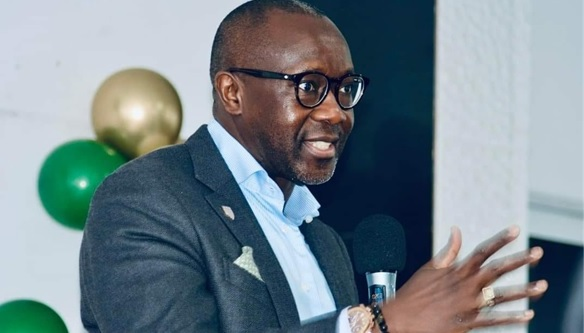
MONROVIA: Gbarpolu County Senator, Amara M. Konneh, has sounded the alarm over prolonged container delays, mounting port charges and their potential contribution to Liberia’s stubbornly high consumer prices.
In a formal communication, dated October 25, 2026, addressed to Senate President Pro-Tempore, Nyonblee Karnga-Lawrence, Konneh called for the Senate to summon major port operators, government agencies and customs brokers to explain mounting complaints about operational inefficiencies and excessive transaction costs at the Freeport of Monrovia.
The senator wants the stakeholders to appear before the Senate in a Committee of the Whole hearing to account for reported shipping delays, constraints in port infrastructure, the status of dredging, and the multiplicity of charges imposed on businesses importing goods into Liberia.
The proposed hearing comes amid growing concerns that port-related inefficiencies are increasing the cost of doing business, disrupting commercial activities and potentially undermining efforts to make essential commodities more affordable for ordinary Liberians.
In his communication, Senator Konneh said, importers and shipping agents had consistently complained that containers destined for Liberia were spending an average of more than 30 days at sea before berthing at the Freeport of Monrovia.
According to the complaints cited in his letter, many vessels carrying goods for the Liberian market are reportedly being routed to and queued at ports in neighboring Côte d’Ivoire and Ghana before proceeding to Liberia.
Konneh identified two alleged operational constraints behind the delays: inadequate container yard space at the Freeport and the inability of larger vessels to berth because of prolonged delays in dredging the port basin and access channel.
He warned that the reported bottlenecks were placing considerable pressure on businesses, particularly small and medium-sized enterprises (SMEs), which depend on timely shipments to maintain inventories and meet consumer demand.
The senator said, prolonged delays were tying up working capital, disrupting inventory management, causing stock-outs and exposing importers to substantial demurrage charges and other expenses associated with delayed cargo clearance.
For businesses operating on limited capital, such delays can disrupt supply chains, reduce operating margins and make it increasingly difficult to maintain stable supplies of goods in the domestic market.
Konneh’s concerns raise questions about the Freeport’s capacity to accommodate growing commercial demands and the urgency of addressing infrastructure and operational limitations affecting the country’s principal seaport.
Beyond shipping delays, the Gbarpolu senator raised concerns about what he described as a multiplicity of opaque transaction costs and fees imposed by various actors across the port and maritime supply chain.
He specifically named APM Terminals Liberia, MEDTECH Scientific Limited and Global Tracking and Maritime Solutions (GTMS), alongside other relevant stakeholders, as entities whose charges and operations should be examined.
Konneh argued that the cumulative burden of these costs was being passed on to consumers through higher prices for imported goods.
The proposed Senate inquiry would seek a comprehensive explanation of the fees charged by port operators, service providers and other participants in the cargo clearance process, including the basis for the charges and their combined impact on importers.
The senator’s request places transparency and accountability at the center of the debate, particularly regarding whether businesses are paying justified service fees or shouldering avoidable costs arising from operational inefficiencies.
A public accounting of the charges, if the Senate approves the request, could help establish how much port-related expenses contribute to the final prices paid by consumers and identify opportunities to reduce unnecessary costs.
Konneh also questioned why consumer prices remain stubbornly high despite reported improvements in key macroeconomic indicators.
In his letter, he cited a decline in headline inflation to 4.6% and an appreciation of the Liberian dollar against the United States dollar, arguing that the benefits of these developments were not sufficiently reflected in prices faced by consumers.
He suggested that inefficiencies and high transaction costs at the ports could be contributing to the persistence of elevated prices, potentially weakening the impact of the government’s macroeconomic stabilization program under the International Monetary Fund’s Extended Credit Facility.
Although lower inflation indicates that prices are rising more slowly, it does not necessarily mean that prices have returned to earlier levels.
Nevertheless, Konneh’s concerns underscore the need to examine whether avoidable importation and clearance costs are preventing consumers from benefiting more fully from improved economic conditions.
For households already struggling with the cost of living, additional expenses accumulated along the importation and distribution chain can further strain purchasing power.
The senator warned that failure to address the reported problems could undermine private-sector competitiveness, discourage investment and continue to erode the purchasing power of ordinary Liberians.
To establish the facts and identify practical solutions, Konneh has requested that the Senate summon seven categories of stakeholders to testify before the Plenary in a Committee of the Whole.
The proposed witnesses are the National Port Authority (NPA); APM Terminals Liberia; MEDTECH Scientific Limited; Global Tracking and Maritime Solutions (GTMS); the Liberia Revenue Authority’s Customs Department; the Ministry of Commerce and Industry; and the Brokers Union or Customs Brokers Association of Liberia.
He wants the stakeholders to provide detailed information on the current status of dredging, the Freeport’s berthing and container yard capacity, the full schedule of fees charged throughout the clearance process, and measures being pursued to ease congestion.
He is also seeking concrete proposals outlining immediate and medium-term interventions to reduce delays and lower costs for Liberian businesses.
Their testimony could help the Legislature determine whether the reported challenges stem primarily from infrastructure constraints, operational shortcomings, fragmented service arrangements or other factors requiring regulatory or policy intervention.
The involvement of customs authorities and brokers would also provide an opportunity to examine the clearance process, identify possible administrative bottlenecks and establish whether coordination among the various actors is contributing to delays.
Konneh urged the Senate leadership to accord his request urgent consideration, emphasizing the economic implications of the complaints raised by the business community.
His proposed inquiry places renewed attention on the relationship between port efficiency, private-sector growth and the affordability of goods in a country heavily dependent on imports.
The Freeport of Monrovia plays a central role in Liberia’s international trade, making the efficiency of its operations critical to importers, retailers, manufacturers and consumers.
However, the allegations outlined in Konneh’s communication have yet to be independently established through the proposed legislative inquiry.
The requested hearing would provide the named institutions and companies an opportunity to explain their operations, respond to the complaints and, present evidence of measures being taken to address the reported challenges.
For the Senate, the immediate question is whether the concerns warrant a comprehensive investigation into the costs, capacity constraints and administrative processes affecting cargo movement through the port.
For businesses and consumers, the broader issue is whether improved port operations and greater transparency in the fee structure can help reduce avoidable expenses, strengthen commercial activity and ease pressure on the prices of goods.
Meanwhile, Konneh’s request now places the matter before the Legislature, with the proposed hearing offering a potential avenue for establishing the facts and determining what corrective measures may be necessary.

Towards Economic Empowerment And Reconciliation