By: Elbie Pannoh
MONROVIA: The National Housing Authority (NHA) has unveiled a package of new investment products designed to attract diaspora capital into Liberia’s housing sector as the country confronts a major housing deficit, rapid urbanization and growing demand for affordable homes.
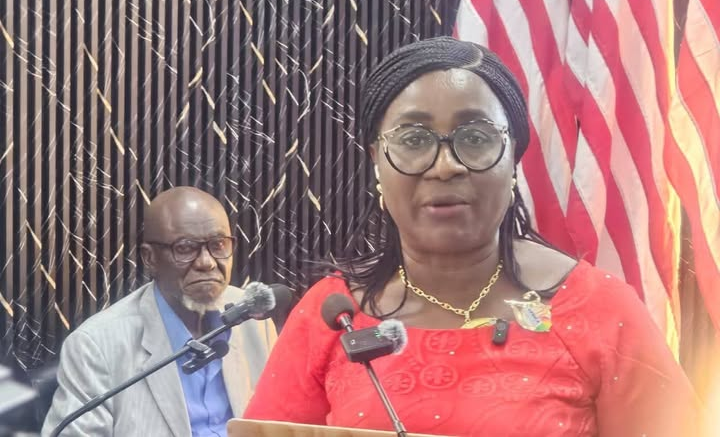
NHA Managing Director, Florence Geegbae, disclosed the initiatives Tuesday, October 6, 2026, during the Ministry of Information’s regular press briefing in Monrovia.
Geegbae said, Liberia needs an estimated 200,000 additional dwelling units to address existing overcrowding, while another 163,035 units will be required to accommodate population growth.
The figures, she said, are based on a 2020 World Bank assessment cited by the NHA, which also estimates that Liberia needs approximately 4,891 additional housing units each year to replace old and damaged homes at an annual replacement rate of three percent.
The assessment further indicates that about 70 percent of Liberia’s population lives in slum conditions, while approximately 512,000 urban housing units will be needed by 2030.
With the housing gap widening, Geegbae said, the NHA is developing mechanisms to enable Liberians at home and abroad to participate more directly in housing development and investment.
The initiatives were highlighted during the Liberia Diaspora Investment Conference 2026, held under the theme, “Transforming Diaspora Interest into Concrete Housing Development.”
Removing barriers to diaspora investment. According to the NHA, two major obstacles have discouraged diaspora investment in Liberia’s housing sector: concerns surrounding land transactions and limited understanding of the estate-development process.
To address these challenges, the authority has introduced a Housing Investment Portal designed to provide investors with a centralized online platform for land verification, permit requirements, construction-cost calculations and access to a directory of licensed professionals.
The NHA has also developed an Estate Development Roadmap to guide investors through the various stages of housing development, from land acquisition to the issuance of an occupancy permit.
Under the NHA Partnership Program, diaspora investors will receive technical assistance in navigating land ownership, zoning, planning and permitting requirements.
The authority said, its technical experts will work directly with developers while coordinating with the Liberia Land Authority (LLA) to help streamline the development process.
Pre-verified land bank. Another major component of the initiative is the Pre-Verified Land Bank, which comprises parcels of land verified by the LLA and cleared for NHA-affiliated housing projects.
Geegbae disclosed that the NHA has negotiated and commenced the acquisition of 578 acres of land in several locations, including Bologan in Bomi County and Whowein in Margibi County.
She added that land in Croiserville, Lofa, Bong, Nimba and Grand Bassa counties has either been deeded or is being prepared for housing development.
The NHA is also implementing an Off-Takers Program designed to connect housing developers with prospective homebuyers, financial institutions, institutional investors and government home-assistance programs.
According to the authority, 3,340 civil servants have already been enrolled in the program.
Geegbae said, the NHA is advancing a Planned Community Development Program through which developers may receive free or discounted land to construct housing projects on sites already developed by the authority.
The sites are expected to include basic infrastructure and utility connections, including water, sewage and electricity, along with appropriate zoning arrangements.
The approach is intended to reduce some of the initial barriers associated with housing development while creating opportunities for private-sector participation in the construction of affordable communities.
Meanwhile, the NHA is preparing a Housing Development Report to be published quarterly or biannually.
The report is expected to provide information on housing development, investment trends and emerging opportunities in Liberia’s residential housing market, giving potential investors, and policymakers access to more regular sector data.
The NHA also announced plans to enter into a housing insurance agreement with the National Insurance Corporation of Liberia (NICOL).
According to the authority, a Memorandum of Understanding between the two institutions is expected to be signed next Tuesday.
The proposed partnership is expected to introduce additional mechanisms for managing risks associated with housing investment and ownership.
On ongoing construction, the NHA disclosed that four contracts for the construction of 482 housing units are expected to be signed.
The authority said, an additional 600 housing units are subsequently expected to be constructed across six counties, bringing the number of planned units from the announced projects to 1,082.
It also highlighted its growing international partnerships, including an agreement with Shelter Afrique aimed at establishing a framework for cooperation in affordable housing and sustainable urbanization in Liberia.
In another development, the authority said, its official website has been inaugurated and is now operational, providing investors and members of the public with another channel for accessing information on its housing programs and investment opportunities.
Beyond investment and construction, the NHA is also pursuing policy reforms intended to modernize Liberia’s housing sector.
Geegbae disclosed, that the authority has validated a new National Housing Act, which is awaiting legislative endorsement and enactment.
The proposed legislation would replace Liberia’s existing housing law, which dates back to April 1960.
According to the NHA, updating the legal framework is necessary to reflect current housing realities, strengthen institutional coordination and provide a more modern foundation for addressing Liberia’s expanding housing needs.
With the housing deficit, urbanization and population growth continuing to place pressure on available accommodation, the NHA says, its new investment products, land initiatives, partnerships and proposed legislative reforms are intended to create a more structured environment for housing development while opening greater opportunities for Liberians at home and abroad.

Towards Economic Empowerment And Reconciliation