By Frank P. Martin
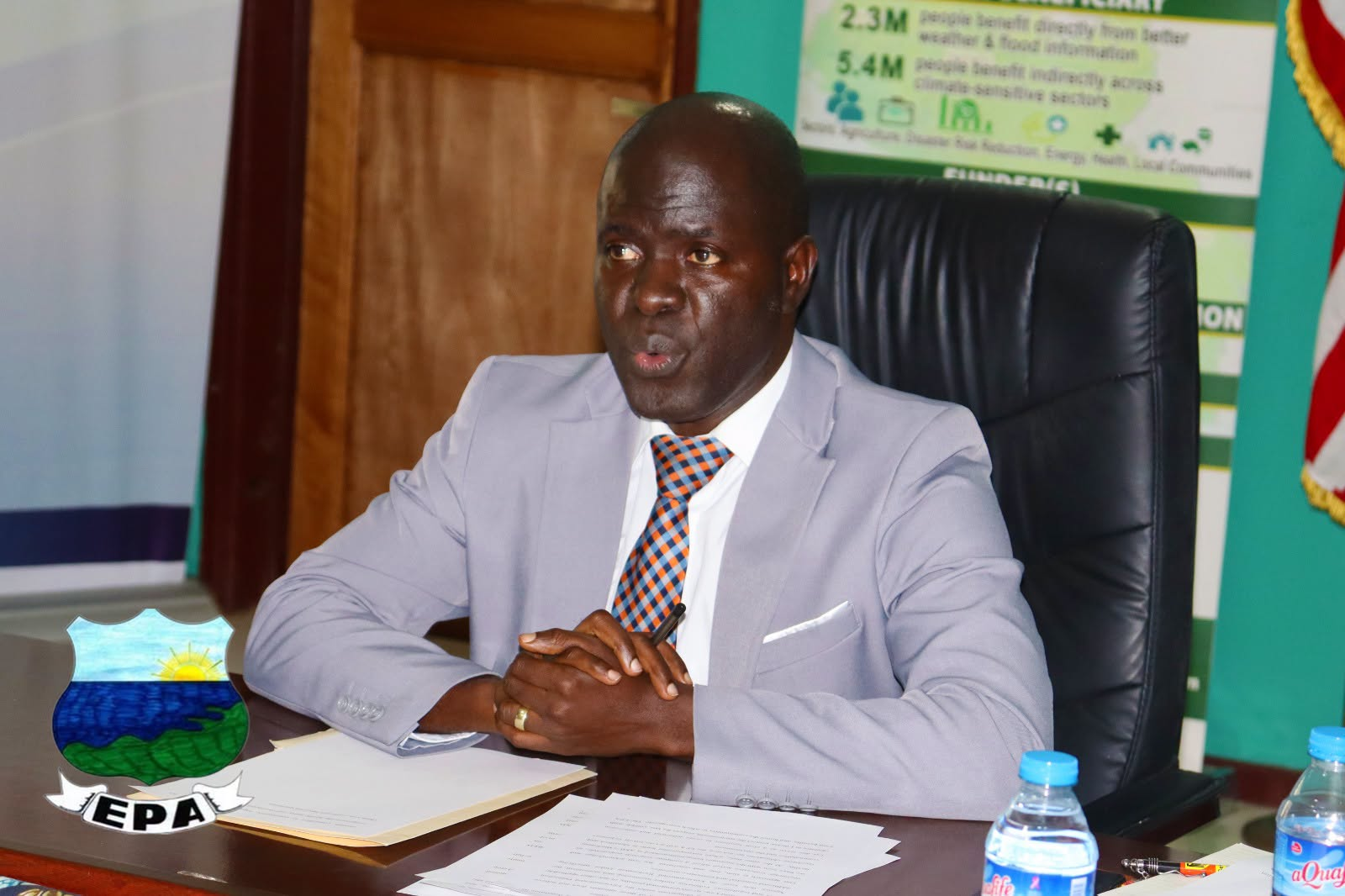
MONROVIA: Liberia must move beyond development plans tied to electoral cycles and establish a legally backed 25-year national framework to preserve continuity, accountability and measurable progress across administrations, EPA Executive Director, Dr. Emmanuel K. Urey Yarkpawolo has proposed.
The former vice-presidential candidate of the Liberian People’s Party (LPP) and current Executive Director of the Environmental Protection Agency (EPA), has called for a fundamental shift in how Liberia approaches national development, arguing that long-term priorities should survive changes in political leadership.
In a reflection following recent engagements in the United States, including meetings around the United Nations General Assembly and Security Council in New York and the Liberia Diaspora Conference in Washington, D.C., Dr. Yarkpawolo proposed a 25-year national development framework to be implemented through successive five-year plans.
His proposal comes against the backdrop of several national development strategies introduced since the end of Liberia’s civil wars, including the Poverty Reduction Strategy, Agenda for Transformation, Pro-Poor Agenda for Prosperity and Development, and the current ARREST Agenda.
According to Director Yarkpawolo, Liberia’s fundamental problem is not a shortage of development plans, but the difficulty of maintaining continuity, translating commitments into measurable outcomes and preserving institutional knowledge when political administrations change.
He argued that the country’s six-year presidential cycle can create structural challenges for long-term planning.
An incoming administration may spend its first year developing or restructuring its development program, with implementation gaining momentum later. As another election approaches, political competition and electoral priorities can increasingly compete with longer-term national objectives.
“Planning is necessary, and development does continue during elections,” Yarkpawolo wrote, “but we must ask how much momentum we lose through repeated planning and political competition.”
He stressed that his proposal is not intended to prevent elected governments from establishing their own priorities. Instead, he said, successive administrations should operate within a set of broadly agreed national objectives while retaining the flexibility to determine how those objectives are achieved.
Yarkpawolo also addressed a recurring political controversy in Liberia: competing claims over which administration deserves credit for major development projects.
He noted that one administration may initiate a project while a successor provides funding, completes construction or rebrands it under a new development program.
Such circumstances, he said, can produce political disputes over ownership while diverting attention from the ultimate beneficiary—the Liberian people.
“Citizens deserve an honest account of each administration’s contribution, while the project remains a national achievement,” he wrote.
To address the problem, Yarkpawolo proposed establishing a national project register documenting when major projects were initiated, their sources of financing, implementation status and contributions made by successive administrations.
Such a record, he argued, would provide an objective institutional history of national projects and reduce disputes over political ownership.
At the center of his proposal, is a 25-year development framework divided into four or five successive implementation cycles? Wait. Need correct: 25 / 5 = five five-year plans. We should avoid weird.
The framework would be divided into five-year implementation plans, allowing successive administrations to establish specific priorities while remaining aligned with longer-term national objectives.
Director Yarkpawolo proposed that the process begin with nationwide consultations involving political parties, local communities, businesses, civil society organizations and Liberians in the diaspora.
Those consultations, according to him, would identify measurable national priorities in areas such as employment, education, healthcare, infrastructure, food security, environmental protection and other sectors critical to national development.
The objective, he said, should be to establish priorities that command broad national ownership rather than programs identified primarily with a particular administration or political party.
He further proposed a National Development Continuity and Planning Act requiring successive administrations to align their development programs with the national framework and report periodically on implementation.
Under the proposed legislation, significant deviations from established national priorities would require public consultation and legislative scrutiny.
However, Yarkpawolo cautioned against making the framework rigid or inflexible.
The five-year plans, he said, should clearly identify priorities, projected costs, financing arrangements, responsible institutions, performance indicators and deadlines, while allowing governments to respond to technological changes, emerging evidence and unforeseen national circumstances.
Periodic reviews could allow adjustments when conditions change, with significant emergency modifications explained publicly and subjected to appropriate oversight.
Rather than creating another government institution, Yarkpawolo proposed expanding the role of the Governance Commission to coordinate national development reviews, maintain institutional records, assess progress and publish independent findings.
For such a role to be effective, he said, the Commission would require operational independence, transparent financing and the ability to publish its findings without political clearance.
Government ministries and agencies would remain responsible for implementing development programs, while the Ministry of Finance and Development Planning would retain responsibility for fiscal management, budgeting and development planning.
The Governance Commission, he said, would provide an additional layer of accountability to the Legislature and the public.
Yarkpawolo also called for stronger protection of professional expertise within government, arguing that Liberia repeatedly loses institutional knowledge when experienced technical personnel leave public service following changes in political leadership.
He proposed that designated technical positions be filled through transparent, competitive processes based on qualifications, competence and integrity, enabling professionals to provide continuity across electoral cycles.
He also suggested staggered terms for commissioners and protected career appointments, coupled with performance evaluations and due process for addressing misconduct or poor performance.
“Public service should offer security for competent work and accountability for failure,” he wrote.
For long-term planning to produce tangible results, Yarkpawolo said, national budgeting must be directly linked to the country’s development priorities.
Annual budgets, he argued, should clearly demonstrate how public expenditure advances long-term national goals, while major infrastructure and development projects should include realistic financing, maintenance and sustainability plans.
He also called for greater transparency when governments decide to discontinue projects inherited from previous administrations.
Before a major project is cancelled, he said, the government should publicly explain the rationale and assess the potential financial, social and developmental consequences.
The proposed national project register could support this process by providing a documented history of projects and identifying the respective contributions of successive governments.
Yarkpawolo said, public confidence can weaken when government announcements receive greater visibility than measurable outcomes.
To address this, he proposed an annual national progress report detailing what governments promised, how much was budgeted and spent, what was delivered, what remains incomplete and the reasons for delays.
Consistent performance indicators, he said, would enable citizens to track national development over time and assess whether public resources are producing the intended results.
He cited the experiences of Indonesia, Singapore, Japan and South Korea as examples of countries where sustained planning, institutional capacity and continuity of investment have played roles in development, while acknowledging that Liberia’s circumstances are distinct.
For Liberia, he said, the lesson should not be to replicate another country’s model wholesale, but to develop institutions capable of sustaining national priorities beyond individual administrations.
Yarkpawolo said, the proposed reform could begin under President Joseph Nyuma Boakai and the current Legislature while the government continues implementing the ARREST Agenda.
Rather than discarding existing development programs, he advocated building on work already underway while creating stronger institutional mechanisms to guide future administrations.
His proposal ultimately calls for development to be treated as a continuing national process rather than a series of separate political projects.
“Each administration should advance the work, receive fair recognition for its contribution, and leave the next government better placed to serve Liberia,” Yarkpawolo concluded.
Towards Economic Empowerment And Reconciliation