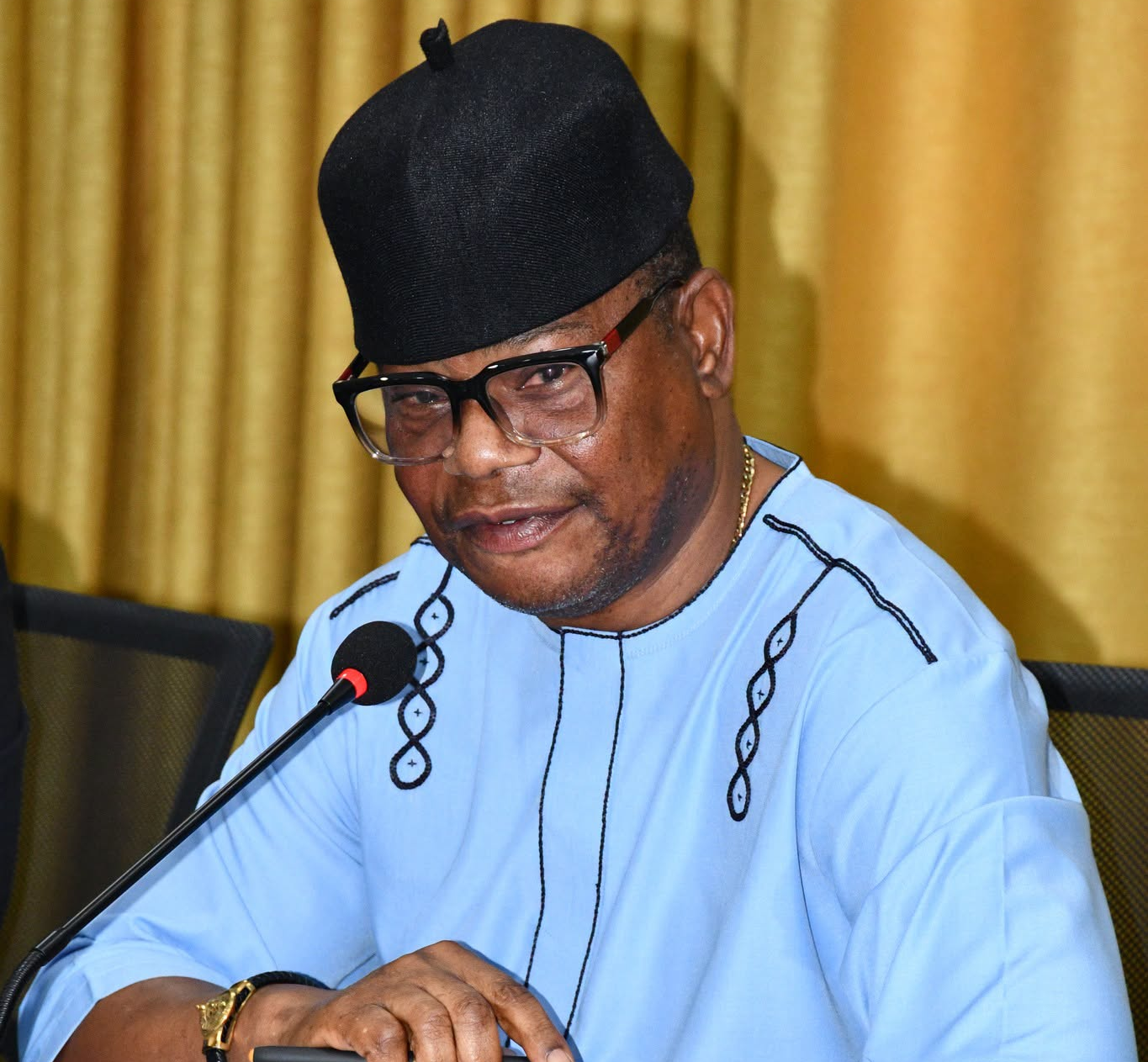
USA: Finance and Development Planning Minister Augustine Kpehe Ngafuan says, Liberia is better today than yesterday, but rising living costs and persistent service gaps, leave many citizens questioning what has improved.
Minister Ngafuan has declared that “Liberia today is better than the Liberia of yesterday,” challenging Liberians at home and in the diaspora to recognize what he described as significant progress under President Joseph Nyuma Boakai.
But the minister’s upbeat assessment has opened a broader national conversation: Which Liberia of yesterday was he comparing with today—and what does “better” mean for ordinary Liberians whose daily struggles remain acute?
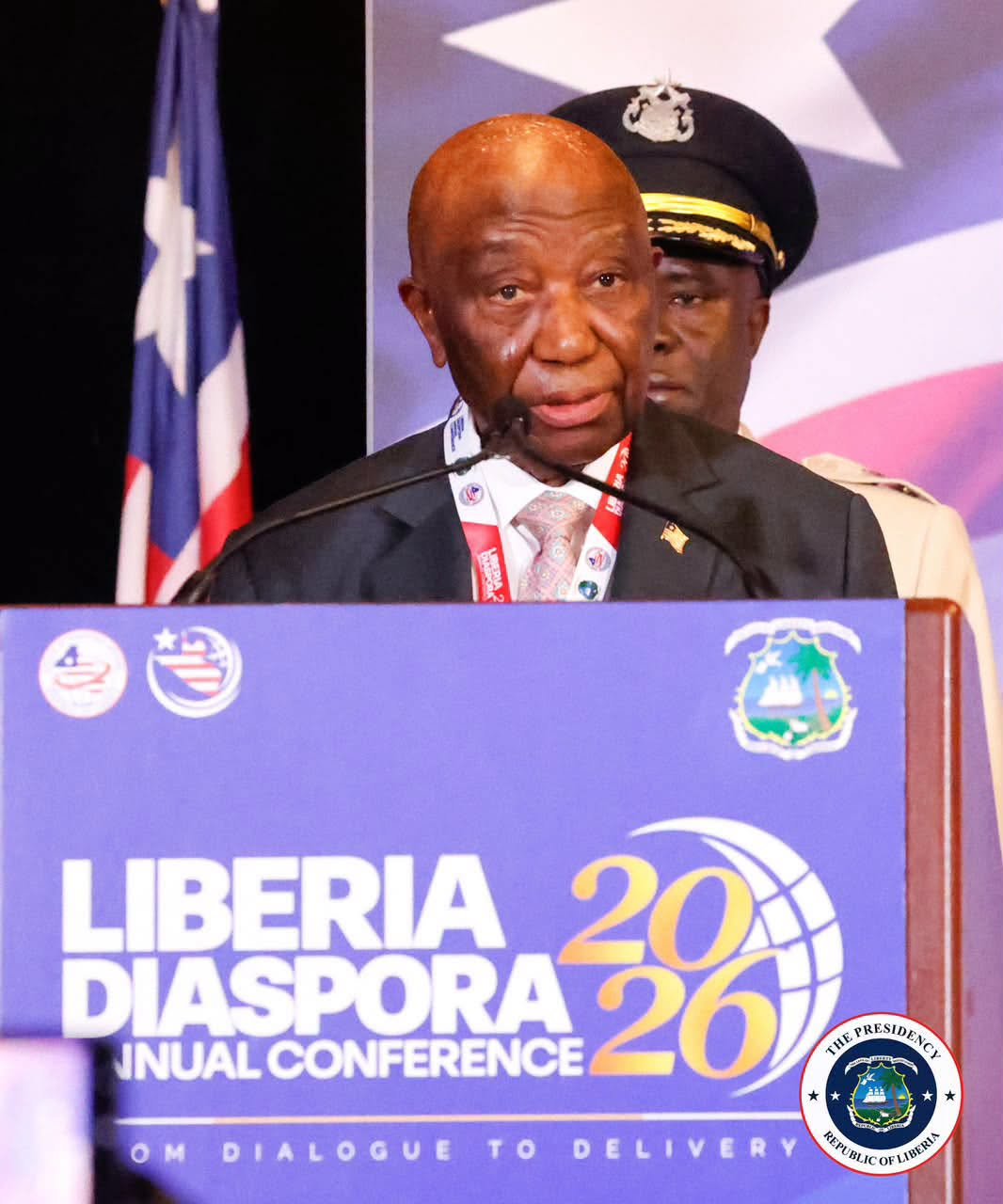
He made the assertion while addressing Liberians in the United States alongside President Boakai and other senior government officials.
Minister Ngafuan acknowledged that the country remains imperfect and faces significant challenges, but argued that the administration’s record over its first two years and eight months demonstrates measurable progress across several sectors.
“The thing I want to stress is that the Liberia of yesterday versus the Liberia of today; they are two different things. Liberia today is better than the Liberia of yesterday,” Ngafuan told the gathering.
He added: “Although the Liberia of today is not perfect. We still have ways to go.”
The Liberian Finance Minister pointed to the government’s reported achievements in health, revenue mobilization and economic management, citing the arrival of Liberia’s first MRI machine for installation at the John F. Kennedy Medical Center and the country’s crossing of the US$1 billion domestic-revenue threshold.
Liberia officially surpassed US$1 billion in domestic revenue in September, a milestone government used as public relations staunch, with officials describing as the first in the country’s 179-year history.
The Liberia Revenue Authority reported that collections had risen from over US$700 million in 2024 to US$848 million in 2025, before crossing the billion-dollar mark in 2026.
The government has presented the revenue increase as evidence of stronger tax administration, improved compliance, reduced leakages and greater domestic capacity to finance national priorities.
But the significance of the minister’s “better Liberia” declaration becomes more complicated when viewed against the lived economic realities confronting households.
On September 16, the government increased petroleum price ceilings, placing gasoline at a retail ceiling of US$5.58 per gallon, equivalent to about LRD985 at the referenced exchange rate, while fuel oil rose to about US$6.90, or approximately LRD1,220. The adjustment immediately raised concerns over transportation costs, household expenses and the prices of goods and services.
The pressure is also visible in Liberia’s infrastructure deficit. An International Monetary Fund assessment published in 2026 put nationwide electricity access at about 33 percent, with rural access below 10 percent, while identifying weak transmission and distribution networks as continuing constraints on reliable electricity services.
For citizens struggling with transportation, electricity, food, healthcare, education and employment costs, therefore, the question is not simply whether government revenue has increased or whether new equipment has arrived at a national hospital.
The more immediate question is how those improvements translate into measurable changes in household welfare.
That distinction is particularly important because, Minister Ngafuan himself acknowledged that the country is not yet where it needs to be.
“For every one good thing that you can find, there are challenges we still need to confront,” he said. “And we are honest about that.”
He accused government critics of concentrating on what has not yet been accomplished, while overlooking achievements already made.
“Our detractors will focus on what we have not done yet and forget to tell the people of all the things we have done,” Ngafuan said.
But Which ‘Yesterday’? The minister’s comparison, however, leaves an important historical question unanswered.
Since the end of Liberia’s civil war, the country has passed through three major post-war presidential administrations: Madam Ellen Johnson Sirleaf’s two terms from 2006 to 2018, George Manneh Weah’s six-year presidency from 2018 to 2024, and the current Boakai administration, which assumed office in January 2024.
Ngafuan did not identify which of those previous periods constituted the “Liberia of yesterday” that he believes is inferior to the Liberia of today.
That omission is particularly notable because, Ngafuan himself was a senior official during the Johnson-Sirleaf administration.
He served as Director General of the Bureau of the Budget beginning in 2006, became Minister of Finance in 2008 and later served as Minister of Foreign Affairs and Dean of the Cabinet from 2012 to 2015. His official government biography confirms those positions.
President Boakai, meanwhile, served as Madam Johnson-Sirleaf’s vice president throughout her two terms.
The historical record, therefore places several senior figures in the current administration directly within the leadership structure of one of the administrations that preceded them.
That history gives Ngafuan’s statement an added layer: if today is better than yesterday, which policies, institutions, economic conditions or public services from the previous era is the minister measuring against the current administration?
The question is not merely political. It is also an issue of public accountability.
Accordingly, experts indicate that such comparison becomes more meaningful when citizens can identify the indicators being used: revenue, employment, purchasing power, electricity access, road infrastructure, healthcare, education, public debt, investment, poverty, institutional performance or the quality and accessibility of public services.
The US$1 billion milestone is verifiable and represents a significant expansion in domestic revenue collection. Government figures show that collections rose substantially between 2024 and 2026. But revenue collection and household prosperity are not the same measure.
Indeed, Minister Ngafuan himself has acknowledged that the government’s larger fiscal capacity must ultimately produce tangible improvements in citizens’ lives. In an earlier national address, he argued that a larger budget is meaningful only if it produces roads, electricity, better schools, healthcare, jobs and stronger institutions.
That standard now places greater responsibility on the administration. If Liberia can mobilize more than US$1 billion domestically, citizens will naturally ask what the additional fiscal capacity is producing in their communities.
That question becomes even more urgent when fuel prices rise and basic household expenses remain a concern.
The government has argued that global petroleum-market disruptions and international supply pressures contributed to the latest fuel adjustment.
But for an ordinary commuter, the distinction between global market pressure and domestic economic policy may offer little immediate relief when transportation costs rise.
‘Liberia Is Going Up’. Ngafuan remains emphatic about the government’s trajectory. “Keep loving your country,” he told the diaspora audience, stressing that the government’s responsibility is to make Liberia better every day. He described the administration as moving rapidly despite the difficulties it inherited.
“We are not sleeping, we are not crawling; we are strengthened and, to some extent, we are galloping. We will not stop,” he declared.
According to Ngafuan, President Boakai’s demand for greater performance is also driving his ministers.
“The thing about the President is that, the more you do, the more he pushes you to do more. He is impatient for development,” he said.
The minister concluded with an optimistic assessment of the country’s direction: “Liberia is going up; Liberia is not coming down.”
Yet that optimism will ultimately be tested not only by government statistics, but by the experience of the people those statistics are intended to serve.
The historic US$1 billion revenue milestone, the arrival of advanced medical equipment and improvements in government systems are important indicators of state capacity.
But the administration’s broader claim of a “better Liberia” will increasingly be measured by whether citizens experience those gains through affordable transportation, reliable electricity, accessible healthcare, quality education, jobs, stronger purchasing power and improved living conditions.
For now, Ngafuan has supplied the government’s assessment of Liberia’s trajectory.
The unanswered question is whether the Liberian in the market, the classroom, the hospital, the taxi, the farm and the workplace, sees the same “better Liberia” that the finance minister sees from where he sits.

Towards Economic Empowerment And Reconciliation