By Frank P. Martin
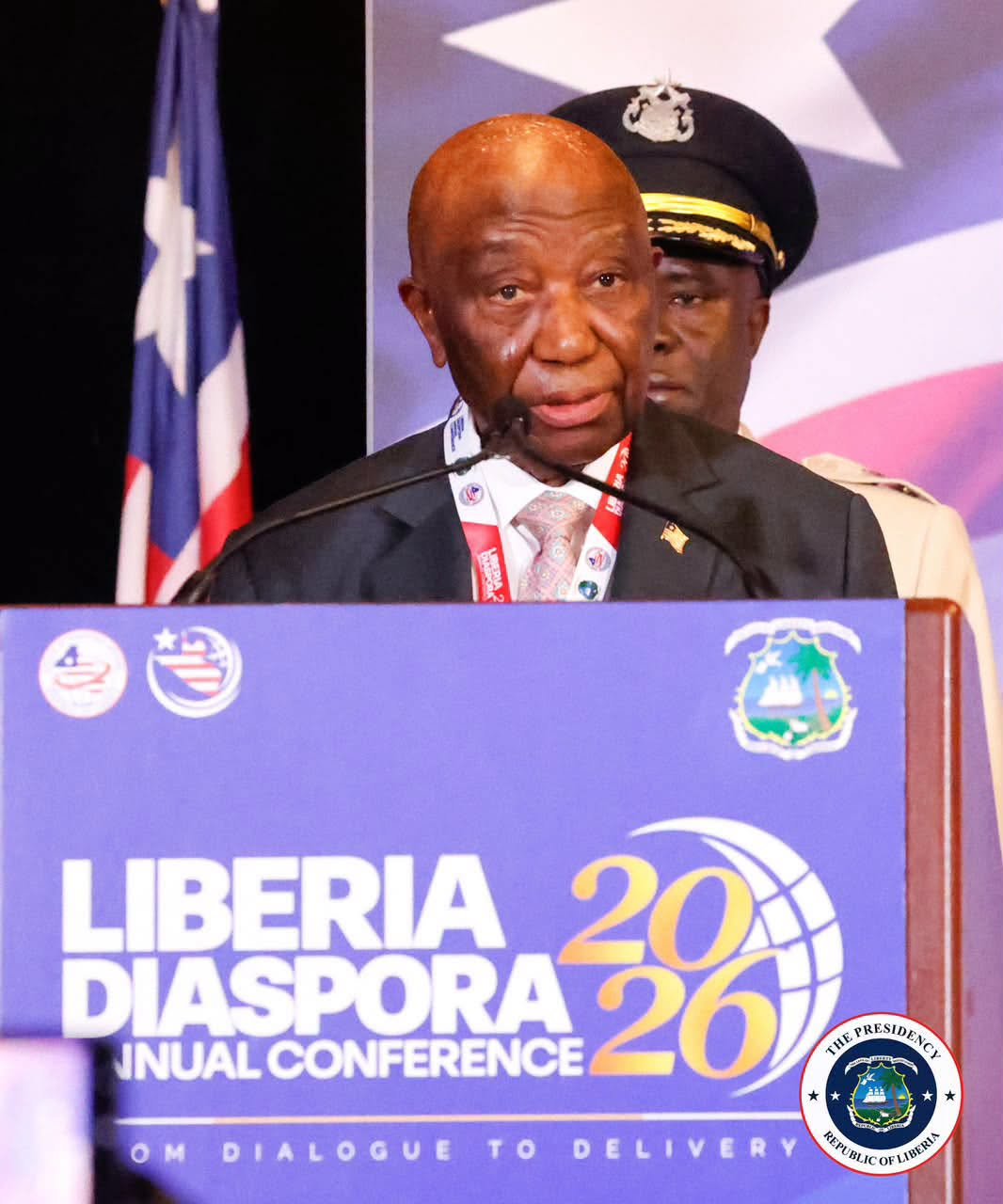
ALEXANDRIA, VIRGINIA, USA: President Joseph Nyuma Boakai Sr. has challenged Liberians abroad to turn patriotism, expertise and resources into concrete investments, jobs, partnerships and measurable development at home.
Addressing the 2nd Annual Liberia Diaspora Conference in Alexandria, Virginia, President Boakai said, the time had come to move diaspora engagement beyond conferences, remittances and declarations toward sustained participation in Liberia’s development.
The conference, held under the theme: “From Dialogue to Delivery: Mobilizing the Global Liberian Diaspora for National Transformation,” brings together Liberians from the United States and other parts of the world to discuss investment, innovation, technology, healthcare, education, agriculture, governance and other national priorities.
Boakai recalled his commitment at last year’s inaugural conference to treating Liberians abroad as active participants rather than observers in national affairs.
“I pledged then that you would not be treated as observers, but as full stakeholders in Liberia’s future. That commitment remains unchanged,” he said.
Describing the diaspora as Liberia’s “16th County” and “Fifth Estate,” the President cited its skills, capital, professional networks, international experience and advocacy as resources that could accelerate national development.
But he said, those resources must now produce measurable outcomes.
“From dialogue to delivery means moving from resolutions to responsibilities; from intentions to implementation; and from annual conferences to year-round partnership,” Boakai declared.
The President acknowledged the enormous contribution Liberians abroad have made to families and communities through school fees, medical expenses, housing, businesses and emergency support.
However, he urged a broader approach that would channel diaspora resources into productive investment, skills transfer and institution-building.
“The next stage of Diaspora engagement must complement remittances with productive investment, skills transfer, and institution building,” he said.
Boakai called on Liberian professionals abroad to establish direct partnerships with institutions at home, urging doctors to work with hospitals and medical schools, educators with universities, engineers with infrastructure programs, technology professionals with digital initiatives and entrepreneurs with Liberian businesses.
He also encouraged young Liberians abroad to build stronger relationships with their counterparts at home through mentorship, internships, innovation and cultural exchange.
While challenging the diaspora to do more, Boakai acknowledged that government has a corresponding responsibility to create an environment in which investment and professional contributions can succeed.
“Partnership must be reciprocal,” he said. “Government cannot ask you to invest, return, serve, or transfer your expertise without accepting its own responsibility to create the conditions in which those contributions can succeed.”
He pointed to the administration’s ARREST Agenda for Inclusive Development and efforts in infrastructure, education, healthcare, agriculture, governance, rule of law and the investment climate.
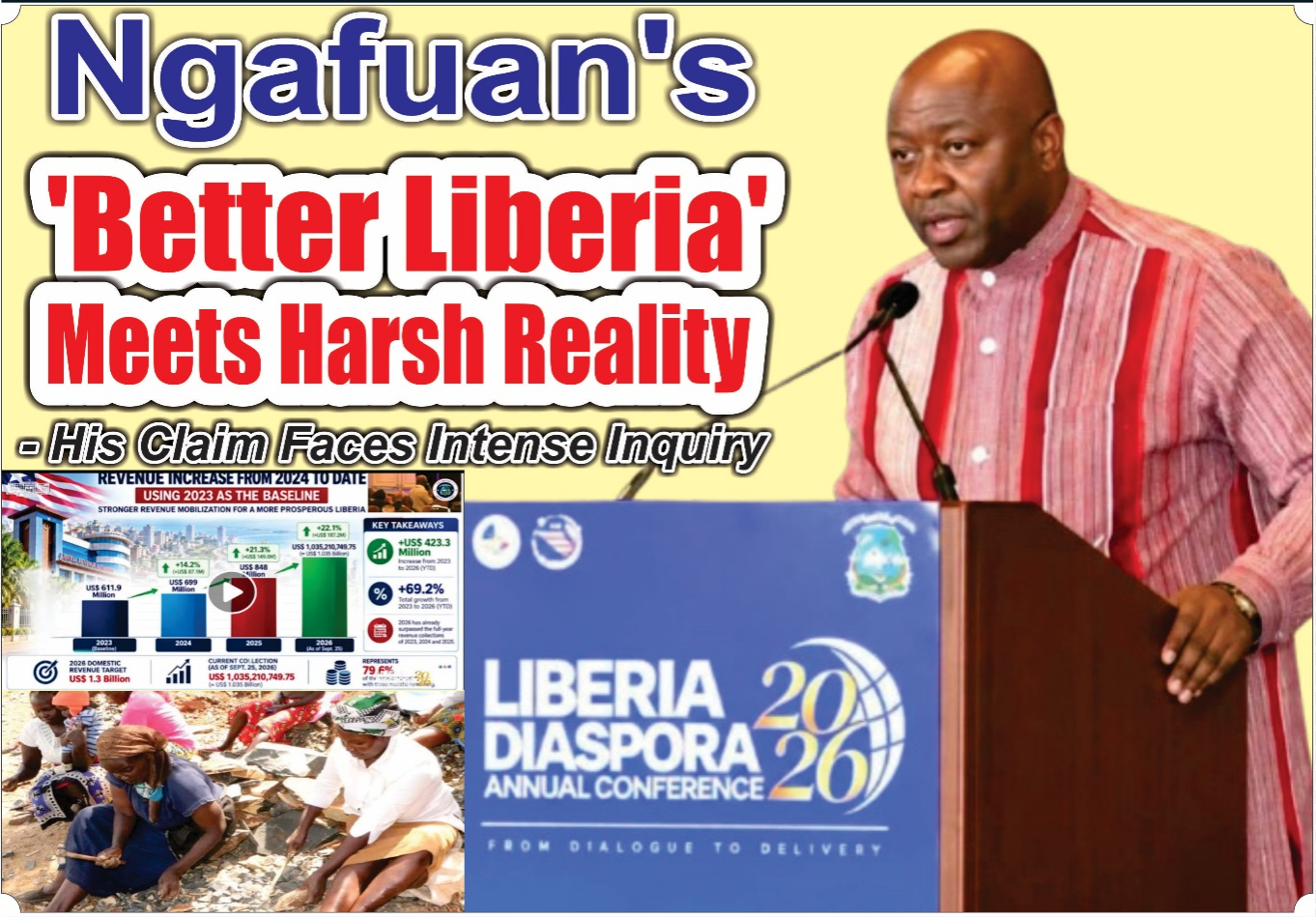
Boakai also cited Liberia’s recent crossing of the US$1 billion domestic revenue threshold, but stressed that increased revenue must ultimately translate into tangible improvements in citizens’ lives.
“The true value of that achievement will not be measured by the number alone. It will be measured by better roads, better schools, health services, jobs, opportunity, and improved livelihoods for our people,” he said.
He added: “We must therefore, match revenue with accountability, investment with integrity, and policy with implementation.”
The President challenged conference participants to leave the gathering with practical commitments.
He called for stronger organization and coordination among diaspora organizations, professionals, businesses, women, young people and diplomatic missions.
He also urged the diaspora to connect professional expertise with Liberia’s national needs, enabling Liberians abroad to teach, mentor, advise, volunteer and provide specialized services even when permanent relocation is not possible.
A third priority, he said, should be transforming diaspora capital into productive investment through credible projects, transparent regulations, professional due diligence and investment mechanisms capable of creating businesses and jobs.
The President further called for greater investment in Liberia’s youth and insisted that conference recommendations should be accompanied by clear implementation mechanisms.
“When we meet again, we should have an implementation scorecard showing what was promised, what was delivered, what was delayed, and why,” Boakai said.
Boakai also appealed for greater unity among Liberians abroad, warning that political and personal divisions could weaken the diaspora’s collective contribution to national development.
“None of this will succeed if we carry our divisions into every space where Liberians gather,” he said.
He urged Liberians to maintain room for political disagreement while preserving their shared national purpose.
“Liberia needs a Diaspora that can debate vigorously and still work together; criticize constructively and still contribute; demand accountability and also accept responsibility,” he said.
The President also linked diaspora engagement to Liberia’s expanding international role, including its current membership on the United Nations Security Council for the 2026–2027 term.
He encouraged Liberians abroad to use their universities, businesses, professional institutions and international networks to create opportunities for investment, technology, education, tourism and development cooperation.
“Diaspora diplomacy is not a substitute for the work of government. It is a force multiplier for the work of the Republic,” Boakai declared.
In his closing remarks, the Liberian leader said, the country needs every category of diaspora participation—from permanent returnees to professionals who can serve temporarily and those who must contribute from abroad.
“Liberia needs your skills, your knowledge, your capital, your networks, your experience, your ideas—and, above all, your continuing belief in what our country can become,” he said.
He then issued a strong call for sustained national action: “Liberia will no longer move backwards.” Boakai urged Liberians to transform patriotism into measurable development.
“Let us turn patriotism into participation; participation into projects; and projects into measurable improvements in the lives of our people.”
He concluded by calling on Liberians at home and abroad to put resources behind their convictions and work collectively for national progress.
“In all that we do, let us always think Liberia, love Liberia, and together build Liberia.”

Towards Economic Empowerment And Reconciliation