By Elbie Pannoh
VIENNA/MONROVIA: Liberia is seeking at least US$22 million to construct, equip and sustainably operate the country’s first comprehensive cancer diagnosis and treatment center, as the government urges stronger international cooperation in the peaceful application of nuclear science and technology.
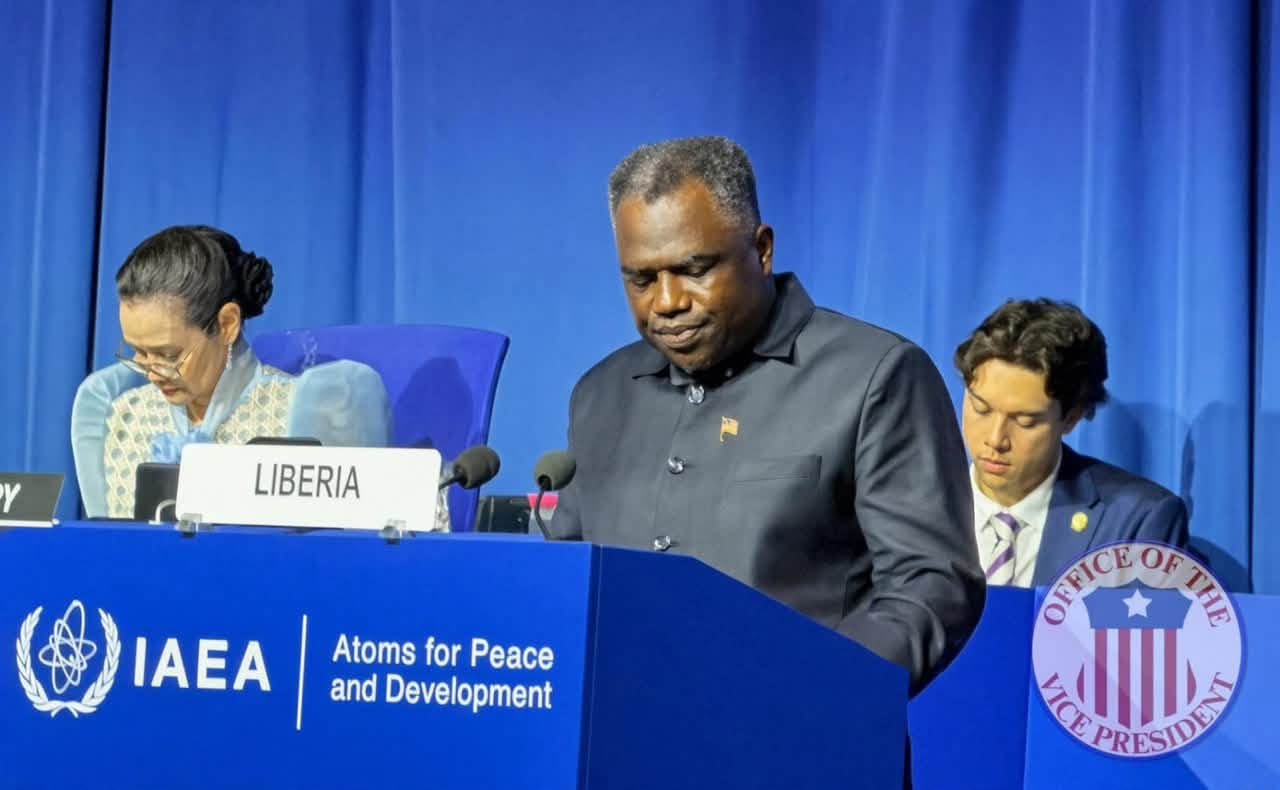
Vice President Jeremiah Kpan Koung Sr., speaking on behalf of President Joseph Nyuma Boakai at the 70th General Conference of the International Atomic Energy Agency (IAEA) in Vienna, said, Liberia intends to deepen its partnership with the agency and use nuclear science and technology to address critical national development challenges.
Koung identified health, food security, climate resilience and radiation safety as key areas in which Liberia seeks expanded cooperation with the IAEA.
“Access to peaceful nuclear technology must not be determined by geography or by national income,” the Vice President told delegates, emphasizing that the benefits of nuclear science should be accessible to countries with significant development needs.
He described cancer as one of Liberia’s most pressing public health challenges, citing reports that approximately 4,217 new cancer cases and 2,745 cancer-related deaths were recorded in the country in 2024.
Breast, cervical, prostate and liver cancers were identified among the leading forms of the disease affecting Liberians.
According to the Vice President, Liberia’s limited capacity to diagnose and treat cancer has forced some patients who can afford it to seek medical care abroad, creating substantial financial and emotional burdens for families.
He said, government efforts to address the challenge received a significant boost in July 2025, when President Boakai and IAEA Director General, Rafael Mariano Grossi broke ground for Liberia’s first comprehensive cancer diagnosis and treatment center.
Koung added that government is now mobilizing at least US$22 million to finance the construction, equipping and sustainable operation of the facility.
He appealed for continued support from the IAEA, particularly through its Rays of Hope initiative, which assists countries in expanding access to cancer diagnosis and treatment.
The Vice President stressed that establishing the center would require not only infrastructure and modern medical equipment but also a skilled workforce capable of delivering specialized cancer care.
According to the VP, Liberia will need trained oncologists, radiologists, medical physicists, radiation therapists and specialized technicians to ensure the facility operates effectively and sustainably.
Beyond cancer care, Koung highlighted other areas of Liberia’s cooperation with the IAEA, including radiation safety and environmental monitoring.
He said, Liberia, with assistance from the agency, has established a functional radiological laboratory and recently received an elemental analyzer valued at approximately €100,000.
The equipment is expected to strengthen environmental monitoring, improve scientific analysis and contribute to public health protection.
Koung affirmed Liberia remains committed to expanding the peaceful use of nuclear science and technology as part of its broader development agenda, while strengthening national institutions and technical capacity to ensure that such technologies are applied safely and effectively.

Towards Economic Empowerment And Reconciliation