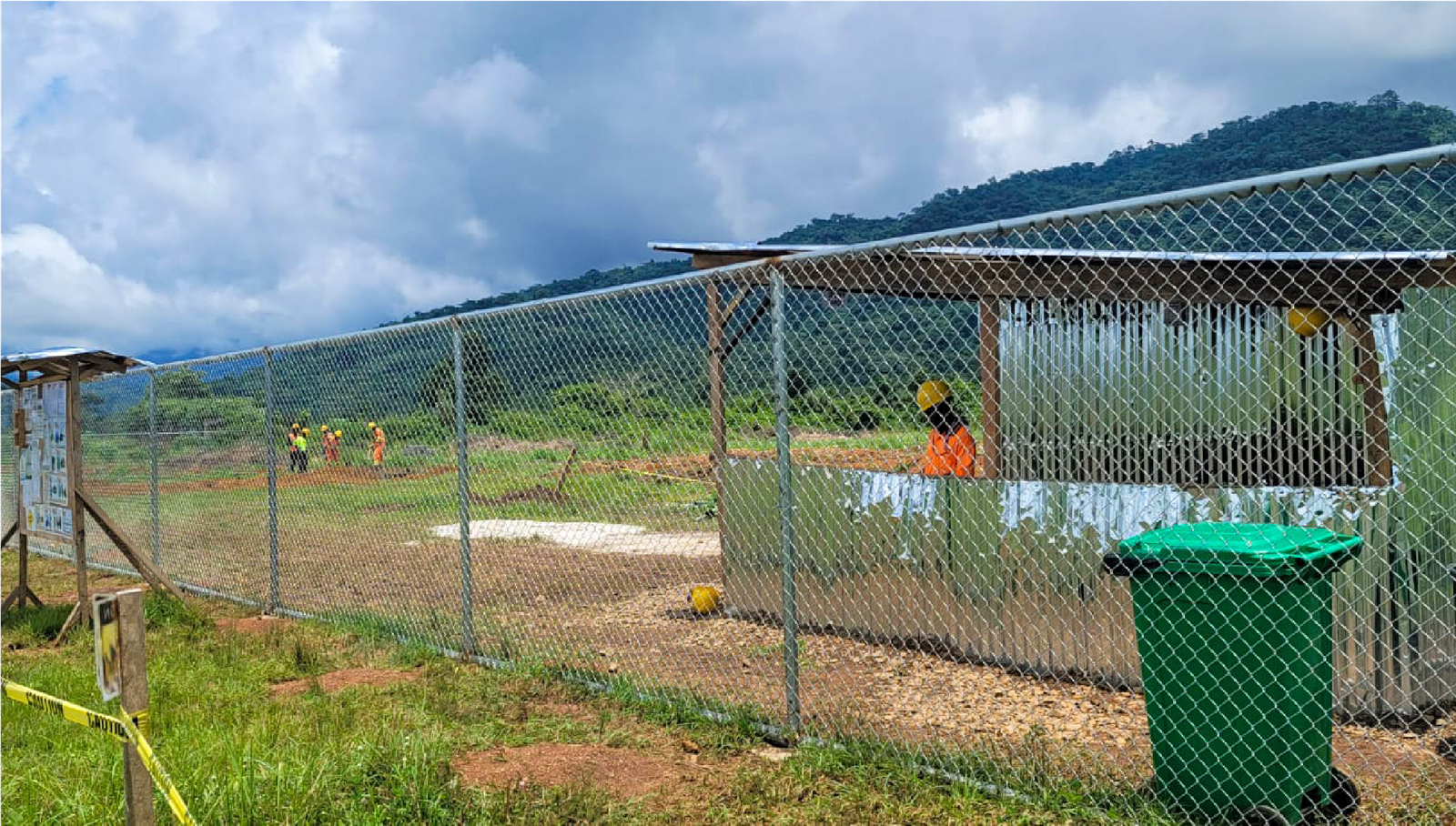
ArcelorMittal Liberia (AML) has kicked off the construction of three modern Waste Management Centers (WMCs) across its operational sites in Nimba and Grand Bassa counties.
The project supports the company’s site-wide strategy to hit its 2030 circular economy targets. The facilities are being constructed at three strategic locations: Buchanan, to support port and logistics operations; Yekepa’s residential, infrastructure, and operational areas, and at Tokadeh, for handling waste from active mining operations.
Liberian contractor Yehowa Group of Companies is constructing all 4 three sites, and physical progress currently stands at 21.5%, with completion targeted for September 30, 2026.
Environmental Superintendent Oliver Vaye explained that the WMCs mark a major shift from standard disposal toward material recovery and strict environmental controls. “The WMC concept is not intended to replace the plan source segregation at departments or to become a final disposal point for all wastes,” Vaye said.
“The WMC provides the controlled interface between the generator, internal collection systems, recycling and recovery processes, EPA-certified waste service providers, and final disposal facilities.”
Once commissioned, each Waste Management Center (WMC) will operate as a controlled facility for the receipt, inspection, segregation, temporary storage, recovery, treatment, and dispatch of waste, rather than as a dumping area. All waste movements will be managed through approved acceptance criteria, inspection, recording, and traceability processes that document waste from their source of generation to the final destination.
The WMCs will facilitate the segregation and secure storage of different waste streams, recovery and consolidation of recyclable materials, management of used oil, batteries, e-waste, hazardous and chemical wastes, and the controlled handling of hydrocarbon-contaminated materials.
Hydrocarbon contaminated wastes will be treated through incineration, while contaminated soils may undergo bioremediation in designated treatment pits where appropriate.
Residual non-recoverable waste will be routed for controlled landfill disposal, and all hazardous and recoverable materials will be transferred to approved EPA certified service providers for recycling, treatment, recovery, or final disposal in accordance with regulatory requirements and environmental best practices.
Also, used oil, batteries, chemicals, and e-waste will be safely held in impermeable, bonded storage areas before transfer to EPA certified handlers, and plastics, paper, glass, and scrap metal will be consolidated for internal reuse or external recycling to keep material out of landfills.
“The project changes the waste-management model from predominantly collection and disposal toward controlled segregation, recovery, traceability, and risk-based management,” Vaye noted.
“The operating model is designed around the waste management hierarchy: prevention and minimization first, followed by reuse, recycling, and recovery.”
The centers will be operated by AML’s Environmental Department through its Waste Management Section, while a shared governance model will maintain strict accountability across waste generators, Estate (Quality of Life) team, security, and external partners.
Beyond improving workplace safety and site housekeeping, the centers will generate digital manifest data and metric tracking, such as landfill-diversion rates, to support AML’s global Environmental, Social, and Governance (ESG) reporting.

Towards Economic Empowerment And Reconciliation