MONROVIA: The Supreme Court of Liberia heard one of the cases on its docket for nearly 10 years during its March Term of Court, AD 2026.
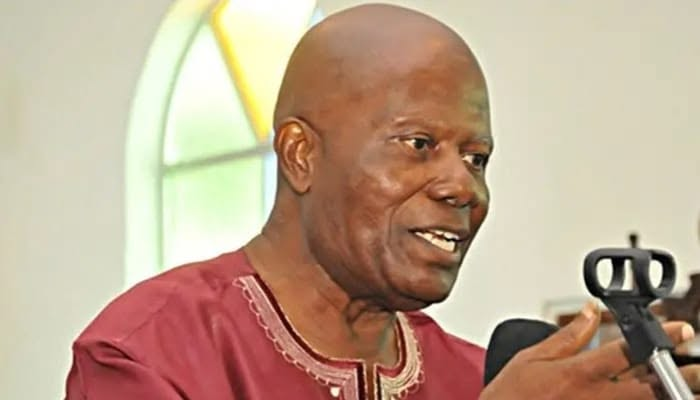
Before the full bench led by Chief Justice, Yamie Quiqui Gbeisay Sr., one of Liberia’s prominent citizens, Dr. Togbah Nah Tipoteh, was awarded USD 50,000.00 (Fifty Thousand United States Dollars) as modified damages in a lawsuit he filed against the Liberia Bank for Development and Investment (LBDI) in 2016 at the Sixth Judicial Circuit Court in Montserrado County.
The Supreme Court heard Dr. Tipoteh's Action of Damages for Wrong on June 1, 2026, and ruled finally on August 28, 2026.
Madame Justice Clinton-Johnson delivered the opinion and indicated that on November 15, 2016, he filed an Action of Damages for Wrong at the Sixth Judicial Circuit Civil Law Court in Montserrado County against LBDI for refusing to return his land deed used as collateral to borrow Ten Thousand United States Dollars (US$10,000.00) on November 27, 2015.
Justice Clinton-Johnson, who read the opinion on behalf of the Gbeisay’s bench, said LBDI (Appellant) required the appellee (Dr. Tipoteh) to use his deed for his ¼ acre of land situated on Ashmun Street as collateral.
The Associate Justice pointed out that, the appellee (Dr. Tipoteh), on March 26, 2016, paid the full amount of (US$10,000.00) that was owed to the appellant (LBDI), including interest and all other charges; that thereafter the appellee (Dr. Tipoteh) wrote the appellant (LBDI), requesting for the collateral deed but that up to the filing of the complaint, appellant (LBDI) failed to surrender Dr. Tipoteh’s deed without providing any information for its failure to return the collateral deed despite all efforts applied by the appellee (Dr. Tipoteh) to return his deed.
The Supreme Court noted that the assertion that the failure of the appellant (LBDI) to return the said collateral deed caused the appellee (Dr.Tipoteh) embarrassment, inconvenience and mental distress and economic hardship; and that as a sequel of the withholding of appellee’s (Dr, Tipoteh) deed, the appellee (Dr. Tipoteh) could not use his deed to obtain loan from another bank for any other economic benefit, a consequence of which, the trial court was requested to award general damages to the appellee (Dr. Tipoteh) in an amount not lower than Three Hundred Thousand United States (US$300,000.00) but, he did not provide evidence of economic hardship.
However, after hearing the case during the March Term A.D. 2026, the Supreme Court modified the trial court ruling of (USD 200,000.00) to (50,000.00) Fifty Thousand United States Dollars because it held that it is mandatory that a party seeking an award of general damages on account of wrong and injuries allegedly sustained must provide evidence of the magnitude of the injuries suffered as a basis to enable the court to gauge the size of the award to be appropriately granted.
Madame Justice Clinton-Johnson cited Teahjay v. Dweh et al. [2014] LRSC 3 (10 January 2014). “This Court has also held in the case, National Milling Company of Liberia v. Bridgeway Corporation, [1990] LRSC 14; 36 LLR 776, 785 (1990), that the size of the award for general damages must be based on proof”
The Supreme Court also recognized a 1985 case (Intrusco Corp. v Osseily 32LLR 571-572) wherein Mr. Justice Koroma, speaking for the Supreme Court, stated that “damages are the sum of money which the law awards or imposes as pecuniary compensation, recompense, or satisfaction for an injury done or a wrong sustained, as a consequence of either a breach of a contractual obligation or a tortuous act.
In modifying the trial court's ruling, the Supreme Court reduced the amount from Two Hundred Thousand United States Dollars (200,000.00) to Fifty Thousand United States Dollars (50,000.00).
“The appellant (LBDI) is ordered to pay to the appellee (Dr. Tipoteh) general damages for US$35,000.00 (Thirty-five Thousand United States Dollars) and punitive damages in the amount of Fifteen Thousand United States Dollars (US$15,000.00) for the appellant’s wanton and reckless act in failing to give the appellee’s deed.
The Clerk of this Court is ordered to send a Mandate to the trial court, commanding the judge presiding therein to resume jurisdiction over this case and give effect to the Judgment of this Opinion”

Towards Economic Empowerment And Reconciliation