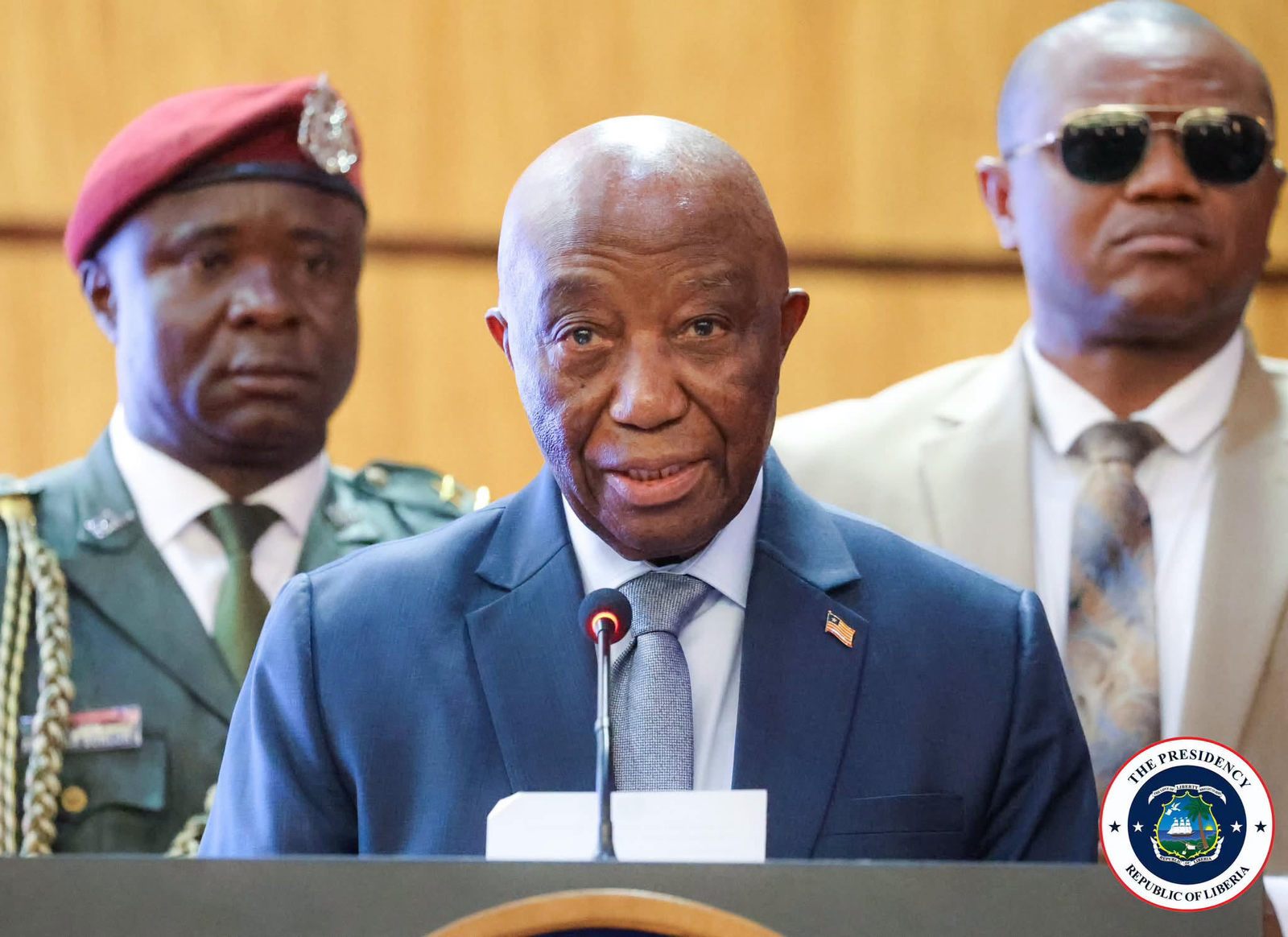
MONROVIA: President Joseph Nyuma Boakai, Sr. has proclaimed October 2026 as the “Month of Good Governance,” calling on government institutions, civil society, the private sector, educational institutions, traditional leaders, development partners, and citizens to participate in a nationwide campaign promoting accountability, integrity, transparency, and effective public administration.
The proclamation places Liberia’s governance practices under heightened public attention, with the month expected to move beyond ceremonial observance toward measurable assessments of institutional performance and public-sector conduct.
According to a Foreign Ministry release, the presidential proclamation is grounded in the Legislative Enactment of October 9, 2007, which established the Governance Commission and mandated it to advise the State on policies and measures aimed at promoting good governance, integrity, anti-corruption, and institutional efficiency.
President Boakai said, good governance remains essential to national stability, sustainable development, the protection of citizens’ rights and dignity, and the consolidation of Liberia’s democratic institutions.
According to the Liberian leader, the October observance is intended to shift the national conversation from symbolic recognition of governance principles toward evidence-based assessment, institutional accountability, citizen participation, and concrete improvements in public-sector performance.
The proclamation consequently raises a central question for the month: will the principles being promoted be visibly reflected in the day-to-day conduct and performance of government functionaries and public institutions across Liberia?
The administration has reaffirmed its commitment to strengthening public institutions and advancing transparency, accountability, ethical leadership, civic participation, and the rule of law, in keeping with Liberia’s national priorities, the African Union Governance Architecture, and internationally recognized governance and integrity standards.
As part of the observance, all ministries, agencies, and commissions of government are directed to collaborate with the Governance Commission in implementing activities designed to promote transparency, accountability, institutional effectiveness, and citizen engagement.
A major component of the initiative will be the deployment of the Governance Barometer, which is expected to generate evidence for the preparation of the Annual State of Governance and Integrity Report.
The proclamation also provides for the launch of the maiden National Integrity Index (NII) by the Governance Commission in collaboration with sister integrity institutions, including the General Auditing Commission and the Liberia Anti-Corruption Commission.
The National Integrity Index is intended to provide a transparent assessment of public institutions against established indicators covering ethical leadership, institutional efficiency, and financial openness.
Authorities said, the initiative could provide an important mechanism for determining whether governance commitments are translating into measurable institutional practices, particularly in areas involving public accountability, financial management, service delivery, and ethical conduct.
President Boakai has further directed that town hall meetings, public dialogues, and digital feedback platforms organized during the month serve as mechanisms for collecting Citizen Scorecards.
The scorecards are expected to incorporate citizens’ experiences and perceptions into assessments of government institutions, creating a channel through which members of the public can provide feedback on the quality and effectiveness of public services.
The proclamation also encourages civil society organizations, academic institutions, the private sector, and the media to participate in public awareness campaigns, governance discussions, and policy debates.
The Governance Commission is expected to convene independent review panels to examine and validate governance data and metrics before policy recommendations are submitted to the Executive.
Educational institutions, local government structures, traditional leadership councils, and media organizations across Liberia’s 15 counties are similarly encouraged to organize dialogues, debates, and community outreach activities focusing on integrity, civic responsibility, accountability, and the practical principles of good governance.
In a rather grant style activities designed by organizers, the October observance will also include special recognition of individuals, institutions, and communities demonstrating notable commitment to, or improvement in, good governance and public integrity.
For the government, however, the month provides an opportunity to demonstrate that governance is not limited to proclamations, conferences, or public messaging, but is reflected in the daily administration of public institutions and the conduct of officials entrusted with state authority.
The effectiveness of the observance, will therefore, be closely associated with the extent to which its proposed mechanisms—including the Governance Barometer, National Integrity Index, Citizen Scorecards, public dialogues, and institutional reviews—produce credible evidence and tangible recommendations for improving governance.
Meanwhile, the proclamation calls on all Liberians and stakeholders to join the Governance Commission (GC) in observing the Month of Good Governance through constructive dialogue, civic participation, institutional engagement, and initiatives aimed at strengthening accountability and public trust.
Towards Economic Empowerment And Reconciliation