By: Barclay Karnley Jr
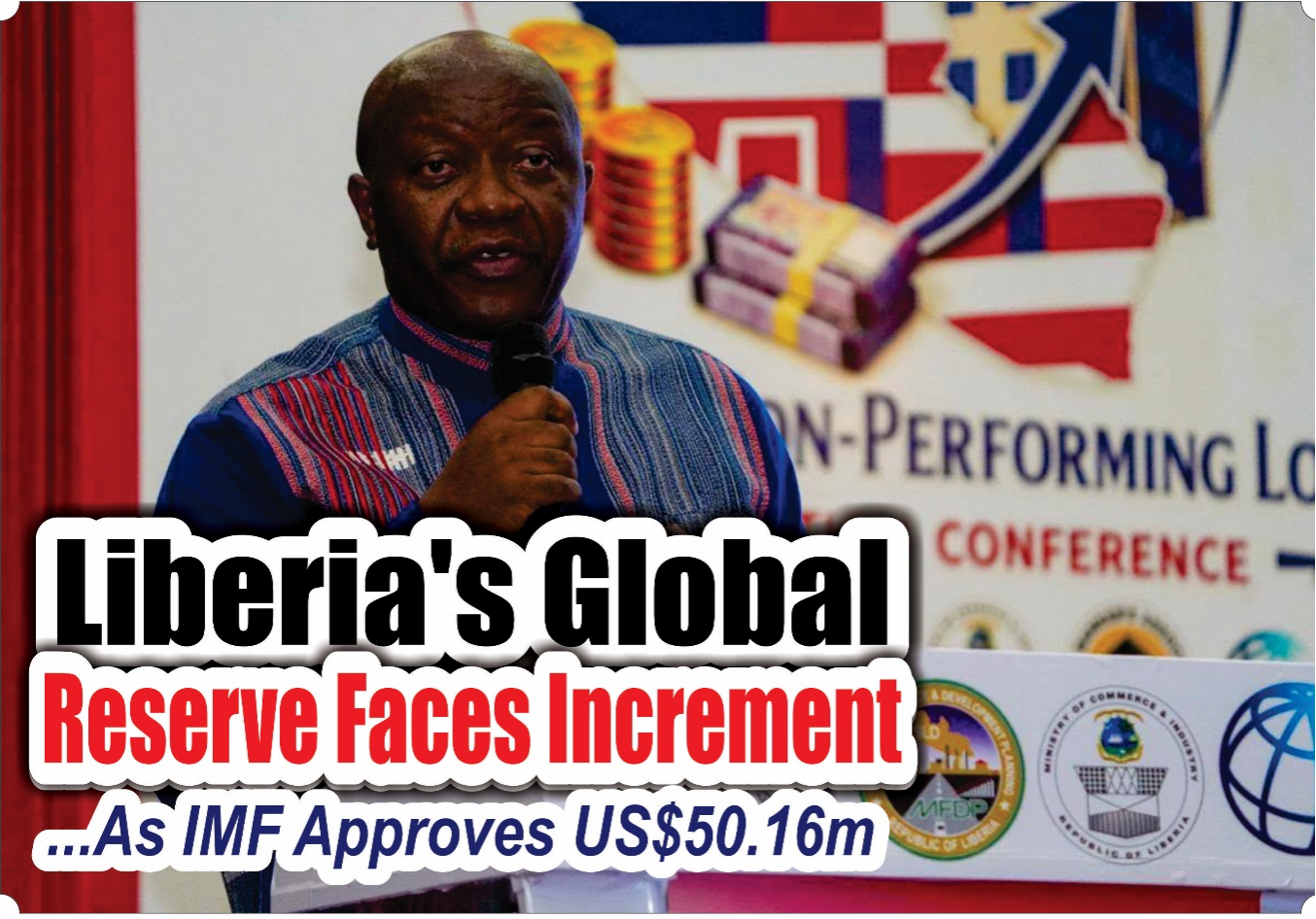
MONROVIA: The Government of Liberia (GoL) has welcomed the decision of the Executive Board of the International Monetary Fund (IMF), to approve the immediate disbursement of approximately US$50.16 million to Liberia.
The latest IMF decision follows the successful completion of the fourth review under the country’s 40-month Extended Credit Facility (ECF) arrangement and the first review under the 21-month Resilience and Sustainability Facility (RSF) arrangement.
The IMF financing, which is not a budget support, will largely beef up the Government's International reserves at the Central Bank of Liberia (CBL) in support of macroeconomic stability.
The financing comprises SDR 19.3 million, equivalent to approximately US$26.2 million, under the ECF arrangement, and SDR 17.62 million, equivalent to approximately US$23.96 million, under the RSF arrangement.
Following the Executive Board discussion, Mr. Bo Li, Acting Chair and Deputy Managing Director, said: “The authorities have continued to implement sound policies, allowing them to make significant progress under the Extended Credit Facility (ECF) and the Resilience and Sustainability Facility (RSF) arrangements.
Despite heightened global risks, primarily stemming from elevated and volatile oil prices, Liberia’s economic performance has remained satisfactory.
He said Liberia’s fiscal consolidation has continued, supported by strong revenue performance, which has helped to reduce debt vulnerabilities and that capital expenditure has accelerated.
According to the IMF’s Acting Chair and Deputy Managing Director, further progress is needed to rationalize unproductive expenditures to create additional fiscal space for priority infrastructure projects, while preserving fiscal discipline.
According to an IMF release issued on September 28, 2026, Liberia’s economy has remained resilient despite a more challenging external environment.
Real Gross Domestic Product (GDP) growth reached 5.1 percent in 2025 and is projected to accelerate to 5.5 percent in 2026, supported by strong mining production as well as construction and manufacturing activity.
The Fund noted that inflation remains contained, while warning that Liberia continues to face downside risks, including higher fuel prices, declining donor support, commodity price volatility, and climate-related shocks.
The latest IMF review also highlighted key reform priorities being pursued by the Liberian authorities, including the mobilization of domestic revenue, particularly through the implementation of the Value Added Tax (VAT) in 2027; prudent and transparent management of the one-off mining concession payment; completion of bank restructuring and efforts to address remaining financial-sector vulnerabilities; strengthening governance and fiscal transparency; and advancing climate-resilience reforms under the RSF arrangement.
Reacting to the IMF Executive Board’s decision, the Minister of Finance and Development Planning, Augustine Kpehe Ngafuan, said, Liberia is elated that the country was being approved to receive additional financing to support development and macroeconomic stability.
“Let me express our gratitude to the IMF for its excellent partnership. This is a vote of confidence in the visionary leadership of President Joseph Nyumah Boakai. We also want to thank the Governor of the Central Bank of Liberia and his team, the Commissioner General of the Liberia Revenue Authority and his team, as well as all other stakeholders who continue to work together to advance Liberia’s economic progress,” Minister Ngafuan stated.
The Finnane and Development Planning Minister emphasized that the approval reflects growing international confidence in Liberia’s reform trajectory and its commitment to sustainable development.
He added that the Liberian government will make sure that there will be no reversals in the gains that have been made.
Under Liberia’s ECF arrangement, approved by the IMF Executive Board in September 2024, the country accessed SDR 155 million, equivalent to 60 percent of its IMF quota.
With the latest disbursement, total disbursements under the ECF arrangement have reached SDR 96.5 million, approximately US$131.67 million.
The RSF arrangement, meanwhile, provides Liberia with total access of SDR 193.8 million, approximately US$265 million, to support reforms that strengthen the country’s resilience to climate-related shocks and address long-term structural vulnerabilities.
The latest IMF decision also underscores the continued implementation of Liberia’s economic reform program and provides additional resources to support the government’s efforts to maintain economic stability while advancing critical structural and institutional reforms.

Towards Economic Empowerment And Reconciliation