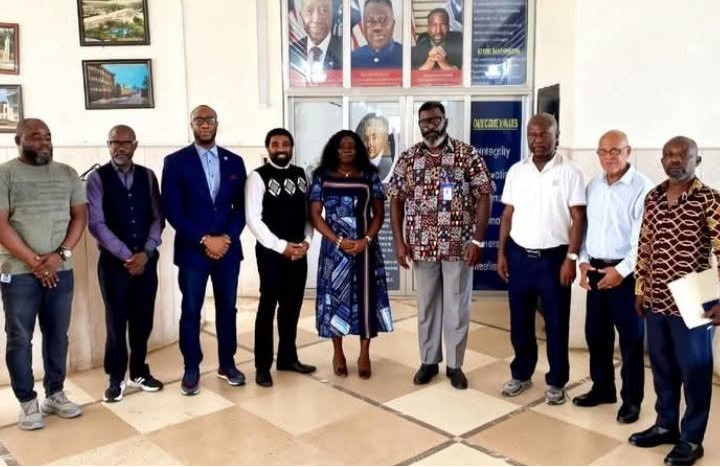
MONROVIA: Monrovia City Corporation (MCC), Governance Commission (GC), and United States Embassy in Liberia have intensified efforts to develop a coordinated strategy to address Monrovia’s persistent waste management crisis through stronger institutional coordination and private-sector participation.
The institutions held a high-level follow-up meeting on September 24 at the office of Monrovia City Mayor, John Charuk Siafa, focusing on the development of a proposed Public-Private Partnership (PPP) framework involving private waste management companies.
The proposed arrangement is intended to strengthen waste collection, transportation, disposal, and overall management in Monrovia and Paynesville, where inadequate waste services have remained a major urban governance and public-health concern.
Representing the U.S. Embassy, Jullion Cooper clarified that the embassy is not positioned to provide direct financial assistance to the MCC for waste management.
However, he said, the embassy is prepared to play a facilitation role by connecting the MCC with established private-sector waste management companies in the United States.
Mayor Siafa disclosed that discussions toward a formal PPP agreement are already underway. Under the proposed framework, the MCC would serve primarily as the regulatory authority, while participating private companies would undertake waste collection, transportation, and management operations.
The arrangement is expected to establish clearer institutional responsibilities while leveraging private-sector capacity to improve service delivery and operational efficiency.
Governance Commission (GC) Executive Director, Jallah C. Kesselly said, disclosed that the Commission would work with relevant ministries, agencies, and commissions to promote institutional coherence and effective coordination in the sector.
Jallah stressed the need for a clear legal and institutional framework defining the mandates and responsibilities of each stakeholder involved in waste management.
For her part, Governance Commission Oversight Commissioner for the Civic Engagement, National Identity and Visioning (CENIV) Mandate Area, Madam Cytirus K. Kerbay, emphasized the importance of citizen participation in addressing the crisis.
Kerbay said, the Governance Commission would support robust public awareness and civic education initiatives aimed at promoting responsible waste disposal and highlighting the health, environmental, and social benefits of cleaner communities.
She cautioned that infrastructure and technical interventions alone would not provide a lasting solution unless accompanied by changes in public attitudes and behavior toward waste disposal.
Monrovia’s waste management challenge remains one of the city’s most visible governance concerns, with accumulated garbage frequently reported in communities, markets, drainage channels, and waterways.
Beyond its impact on the appearance of the capital, poor waste management presents significant public-health and environmental risks, including blocked drainage systems, flooding, pollution, and exposure to disease.
The latest engagement signals an effort by the MCC, Governance Commission, and international partners to move toward a more structured waste management system anchored in regulatory oversight, private-sector participation, institutional accountability, and citizen engagement.
Towards Economic Empowerment And Reconciliation