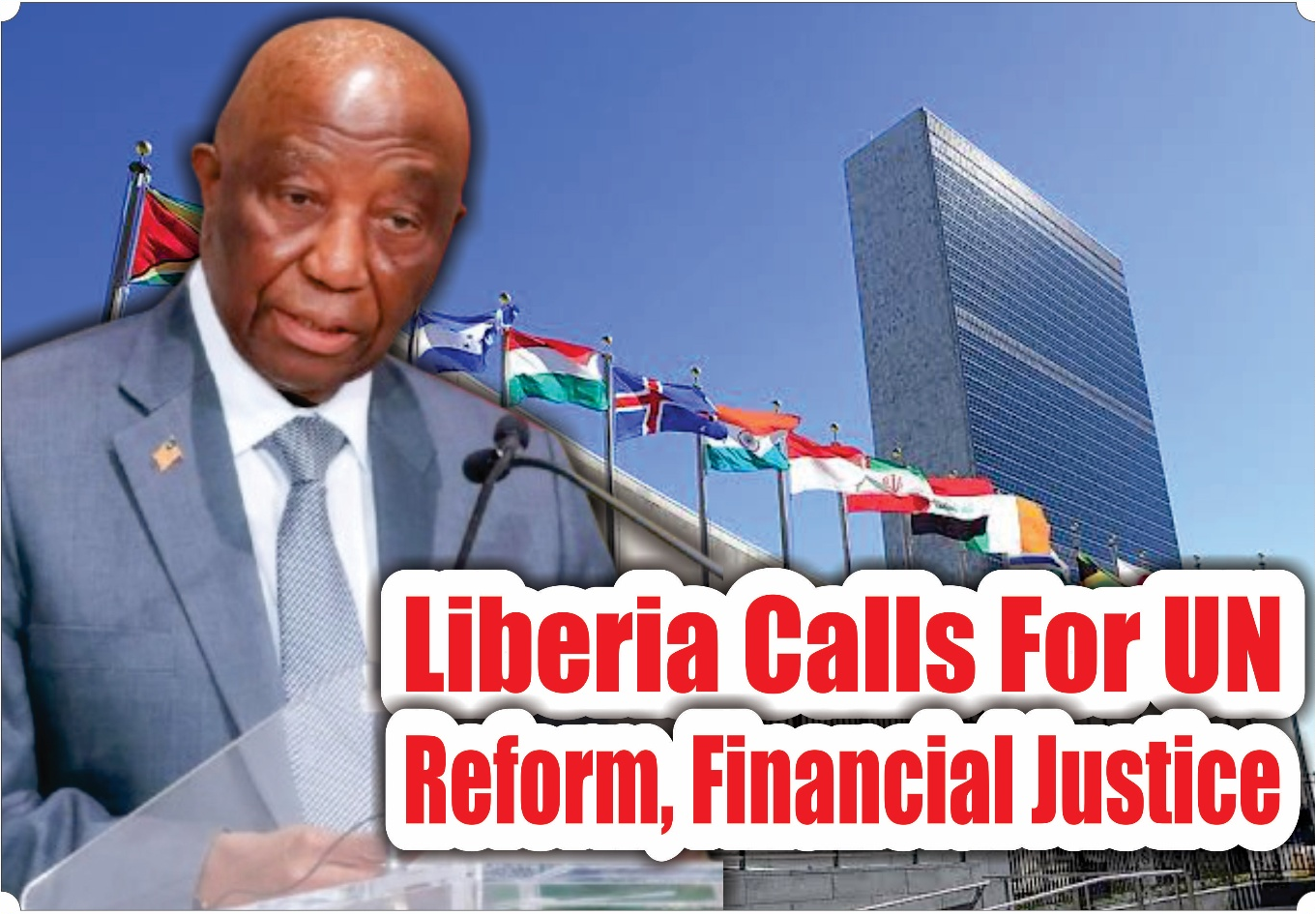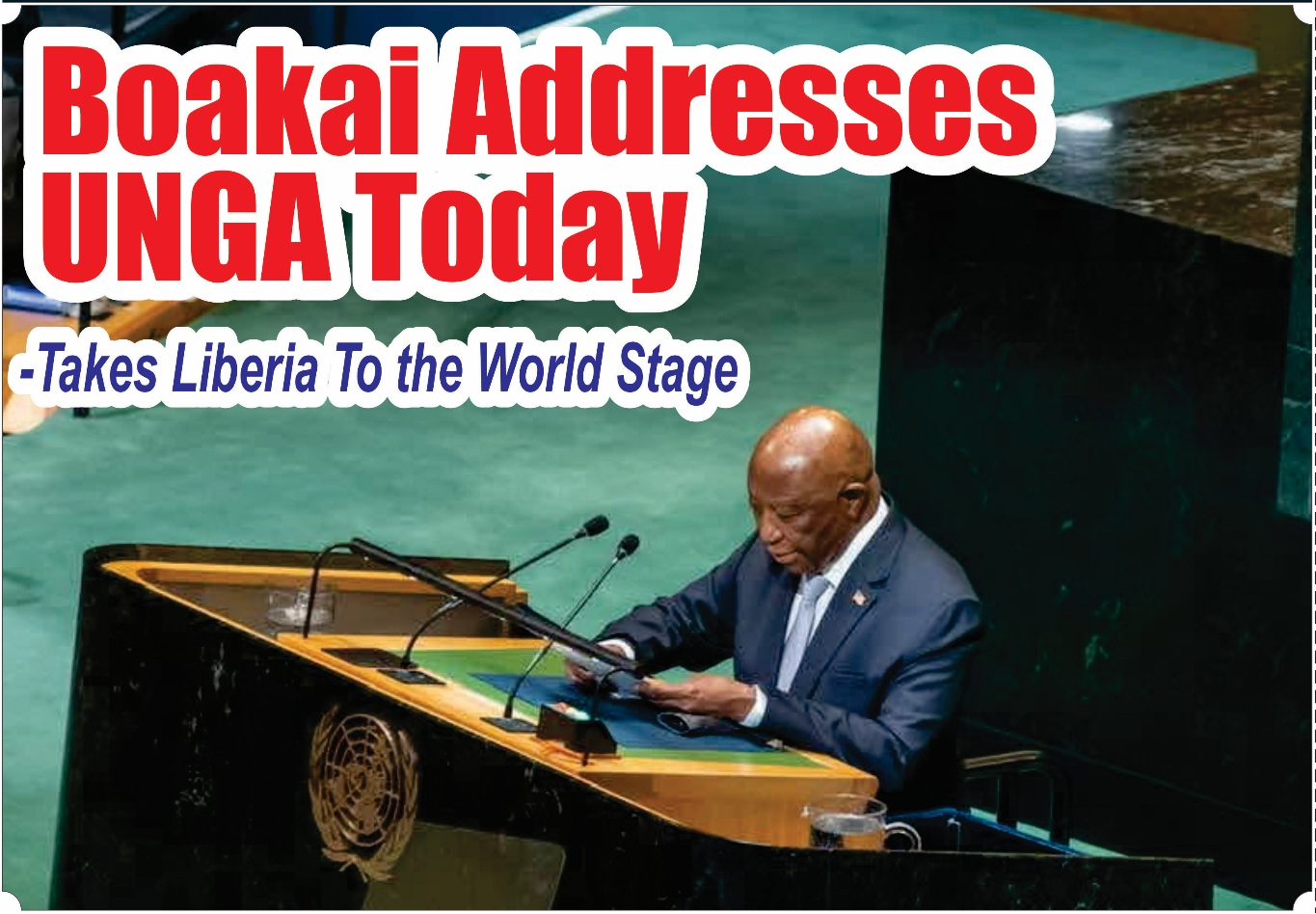
NEW YORK: President Joseph Nyuma Boakai Sr. will take Liberia’s national message to the world on Thursday, today, September 24, confronting a turbulent international environment with a diplomatic case for peace, development, multilateral cooperation and stronger global partnerships.
President Boakai is scheduled to deliver Liberia’s national statement during the General Debate of the 81st Session of the United Nations General Assembly, placing Liberia’s priorities before representatives of the 193 UN member states gathered in New York.
The address comes under the Assembly’s 2026 theme- “Restoring Trust, Managing Transformation: A United Nations That Delivers for All.”
The theme closely intersects with Liberia’s own diplomatic priorities of strengthening international cooperation, advancing peace and security, promoting sustainable development and ensuring that smaller and developing countries have a meaningful voice in global decision-making.
For President Boakai, the appearance is expected to be more than a ceremonial presidential address. It provides an opportunity to articulate Liberia’s evolving role in international affairs at a time when the country is serving as an elected non-permanent member of the UN Security Council for the 2026–2027 term and seeking greater engagement on questions of peace, security and development.
At the center of the President’s anticipated message is likely to be the need to restore confidence in multilateral institutions and reinforce the principle that global challenges require collective solutions.
Liberia’s stated priorities for UNGA 81 include rebuilding confidence in multilateralism, international peace and security, climate action, global health, sustainable development, digital governance and humanitarian response.
President Boakai, is therefore, expected to present Liberia as a country whose history gives it particular standing in conversations about peacebuilding, reconciliation and democratic recovery.
Liberia’s experience of civil conflict, followed by a prolonged period of peace and democratic transitions, has previously informed the President’s international message.
In his 2025 UN General Assembly address, Boakai emphasized Liberia’s commitment to multilateralism, sustainable development and an international system capable of supporting countries emerging from conflict.
That narrative could gain additional diplomatic significance as Liberia prepares to contribute to Security Council deliberations.
Boakai has previously said, Liberia intends to use its Security Council membership to advocate for Africa and the developing world, conflict prevention, peacebuilding, peacekeeping reform and the protection of civilians, particularly women and children.
With calls for amicable resolution of armed conflicts worldwide continuing to dominate international diplomacy, Liberia is expected to reaffirm its commitment to peaceful resolution of disputes, respect for international law and the strengthening of institutions responsible for maintaining international peace and security.
The President could use Liberia’s own post-war experience to argue that sustainable peace cannot be secured through military responses alone. Instead, peace must be supported by accountable institutions, economic opportunity, social inclusion, justice and meaningful participation by communities.
That approach is also reflected in Liberia’s 10-year National Security Strategy, launched in June, which places human security, human rights and citizen-centered governance at the center of national security planning. The strategy adopts an integrated approach involving security institutions alongside health, education, justice and local governance.
In New York, that domestic experience could allow Boakai to connect Liberia’s national transformation with the broader international debate over conflict prevention and human security.
Another expected element of the President’s diplomatic message, is Liberia’s advocacy for stronger African participation in global decision-making.
Liberia’s UNGA program has already placed women, youth, peace and security prominently on the international agenda.
A high-level event hosted by Liberia focused on the country’s experience with women’s leadership in peacebuilding, while another initiative placed youth security and participation at the center of discussions.
The President, is therefore, positioned to reinforce the argument that sustainable peace requires the meaningful inclusion of women and young people—not simply as beneficiaries of development programs, but as participants in governance, peacebuilding and economic transformation.
For Liberia, the issue carries particular diplomatic weight because, the country has historically been associated with women’s leadership in peace efforts and is seeking to translate that experience into broader international advocacy.
Climate change and natural-resource governance are also expected to feature prominently.
Liberia’s participation in UNGA 81 has included discussions on the relationship between natural resources, conflict prevention, climate resilience and sustainable development.
Boakai could use the platform to call for stronger international support for climate-vulnerable developing countries while emphasizing the importance of responsible management of Africa’s natural resources.
For Liberia, the conversation has direct implications for agriculture, forests, coastal communities, infrastructure and livelihoods.
The diplomatic argument is likely to center on ensuring that countries possessing natural resources can transform those assets into broad-based economic opportunities while protecting the environment and preventing resource-related instability.
Beyond political and security issues, the President’s UN appearance could also serve as an economic diplomacy platform.
Boakai’s delegation includes senior officials responsible for finance, health, education, gender and youth, reflecting an effort to link foreign policy with domestic development priorities.
His message to international partners is therefore, likely to emphasize that Liberia seeks partnerships capable of producing tangible outcomes—including investment, employment, infrastructure, education, healthcare, technology and institutional development.
The President is also expected to underscore the importance of international support for Liberia’s development agenda while presenting the government’s reform and development priorities as areas where international partnerships can generate measurable results.
As President Boakai approaches the UN podium, the broader expectation will be for Liberia to move beyond statements of principle and articulate a clear diplomatic vision for how the country intends to use its growing international responsibilities.
The challenge will be to connect Liberia’s national interests with the wider concerns confronting the international community: war and peace, climate vulnerability, economic inequality, technological transformation, global health, youth exclusion and institutional reform.
The UN General Assembly remains the principal annual forum where world leaders present national positions and seek common ground on global challenges.
Today, Thursday, Liberia will have its turn. President Boakai’s message is expected to place Liberia’s peacebuilding experience, democratic journey and development ambitions within that wider international conversation—while seeking stronger partnerships and a greater voice for Africa in shaping the global future.
For Monrovia, the speech will be watched not only for what the President says about the world, but for how convincingly he presents Liberia’s place, priorities and responsibilities in it.
Towards Economic Empowerment And Reconciliation