Kemayah Calls for Peace Through Justice -Says Weak Institutions Threaten Peace
Governance |
👁 1 Views
|
September 25, 2026
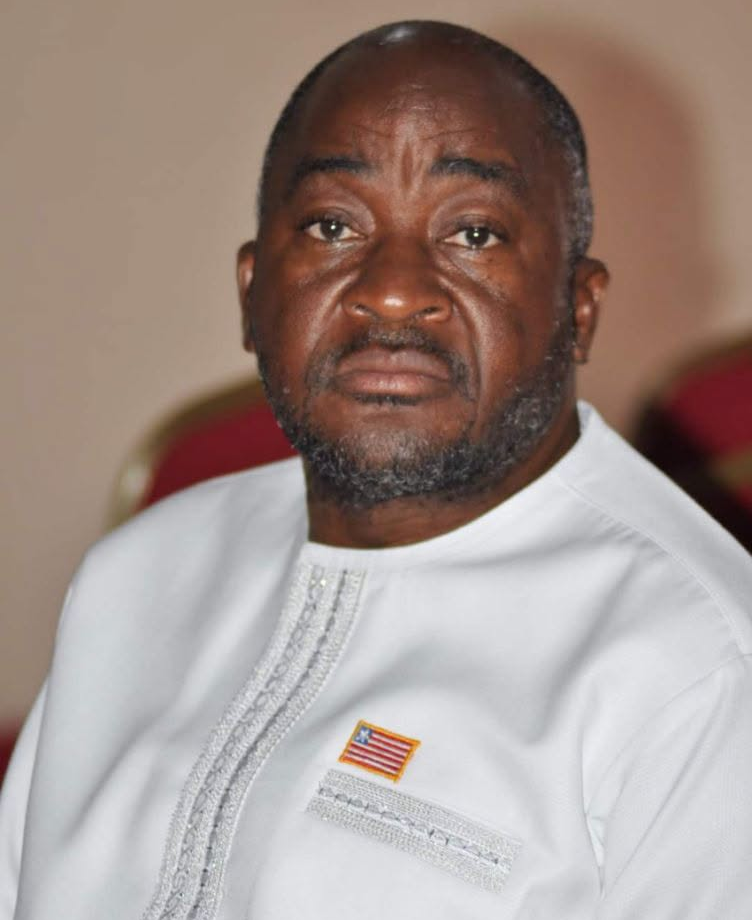
MONROVIA: Liberia’s Former Foreign Minister, Dee-Maxwell Saah Kemayah, has called for credible diplomacy, impartial justice and trusted institutions, warning that declining confidence in governance could undermine peace and deepen political instability.
Ambassador Kemayah delivered the keynote address at the First International Peace Summit 2026, held to commemorate the International Day of Peace on September 21, under the theme “One World, One Humanity, One Future.”
Addressing diplomats, government officials, international organizations, civil society representatives and other participants, Kemayah said, the international community is confronting a consequential period marked by armed conflicts, geopolitical tensions, humanitarian crises and growing public skepticism toward national and international institutions.
Drawing from his experience as Liberia’s former Foreign Minister and Dean of the Cabinet, he argued that sustainable peace depends on three interconnected pillars: credible diplomacy, justice under the rule of law, and institutions capable of earning public confidence.
He said, diplomacy must remain the international community’s first line of defense, emphasizing that preventing conflict is considerably less costly than attempting to resolve violence after it has erupted.
“Diplomacy is the disciplined search for alternatives to destruction,” Kemayah said, stressing that dialogue should never be interpreted as weakness, while negotiation should not be equated with surrender.
He called for greater investment in preventive diplomacy, early-warning systems, mediation, confidence-building measures and sustained communication among conflicting parties.
According to him, diplomatic channels become most important precisely when relations are strained and disagreements appear most difficult to resolve.
“Do not wait for the fire before building the fire brigade,” he urged, advocating the establishment of mechanisms capable of identifying political, economic, social, and security tensions before they escalate into open conflict.
Kemayah also placed the rule of law at the center of sustainable peace, arguing that diplomatic agreements alone cannot guarantee stability where citizens believe justice is selectively administered.
He maintained that no individual should be above the law, while equally emphasizing that no person should be denied the protection of the law.
In democratic societies, he said, elections and political transitions must be free, fair, transparent and inclusive, while changes in government should provide for peaceful transfers of constitutional authority rather than opportunities for political retaliation.
Kemayah further argued that allegations of wrongdoing by former public officials should be investigated through lawful and impartial processes.
Where credible evidence exists, he said, accountability must proceed, but investigations and prosecutions should remain evidence-based, transparent and consistent with due process.
He warned that when political actors believe electoral defeat could expose them to politically motivated legal action, political competition can become dangerously polarized.
“A functioning democracy must therefore reject two extremes: impunity on one side and political persecution on the other,” he urged.
The former Foreign Minister described the judiciary as more than an institution for interpreting and enforcing law, saying, courts also serve as mechanisms for maintaining peace.
He explained that judicial institutions provide peaceful alternatives to confrontation by allowing disputes to move from the streets into established legal processes.
He called for greater investment in judicial independence, capacity and resources, arguing that strengthening courts should be treated as an investment in national stability.
Kemayah similarly urged protection for electoral commissions, legislatures, accountability institutions and other constitutional bodies from political interference.
He said, appointments to independent institutions should follow transparent and merit-based procedures, while removal from office should be governed by law rather than political convenience.
Turning specifically to Liberia, Kemayah invoked the country’s experience of 14 years of civil conflict and more than two decades of post-war reconstruction.
He cautioned that the country’s peace remains a responsibility that must be continuously protected through credible institutions, responsible leadership and respect for the rule of law.
He expressed concern about what he described as rising political tensions surrounding prosecutions of former government officials, saying, questions over the administration of justice can deepen mistrust between government and opposition.
Kemayah cautioned, however, that his broader argument was not against accountability.
Rather, he said, accountability must be credible, impartial and grounded in evidence, warning that perceived political selectivity in the administration of justice can weaken institutional confidence.
“Conflict does not begin when a first gun is fired,” he said. “It begins when trust dies, institutions lose credibility, political opponents become enemies, and citizens cease to believe that justice will protect them equally.”
He urged Liberia to recognize such warning signs early, stressing that the country had already paid a heavy price for peace and should not allow political tensions to develop into broader national instability.
Kemayah also placed responsibility on political leaders to reduce, rather than intensify, tensions.
He argued that political opponents should not automatically be treated as enemies of the state, maintaining that government and opposition can disagree fundamentally while remaining participants in the same constitutional order.
“Political rhetoric can lower tensions or inflame them,” he said, urging leaders to exercise restraint and create space for constructive political engagement.
He also extended the principle to international relations, noting that states will inevitably disagree over security, territory, trade, ideology and foreign policy.
The former minister said, the test of statesmanship is not simply the ability to defeat opponents, but the capacity to find sufficient common ground for adversaries to coexist peacefully.
Kemayah proposed a practical five-point framework for strengthening peace at national, regional and international levels.
First, he called for stronger preventive diplomacy through early-warning mechanisms, rapid mediation teams and confidential communication channels among governments and political actors.
Second, he advocated protecting the independence of national institutions, particularly the judiciary, electoral bodies, legislatures and accountability agencies.
Third, he urged consistent application of the rule of law, including stronger prosecutorial and judicial systems, improved access to legal representation and respect for due process and the presumption of innocence.
Fourth, he called for institutionalized dialogue involving governments, opposition parties, civil society, women, youth, business leaders and other stakeholders.
Finally, he urged reforms aimed at restoring confidence in multilateral institutions by making them more representative, transparent, responsive and effective.
Kemayah argued that international institutions must demonstrate that rules are applied consistently and that smaller states and developing countries receive meaningful protection under international law.
He warned that perceived double standards can weaken confidence in the international system and deepen skepticism toward multilateral institutions.
He nevertheless rejected weakening international cooperation, arguing instead for stronger credibility through consistency, transparency, representation and respect for international law.
Concluding his address, Kemayah said, peace should not be viewed merely as the absence of war, but as a continuing responsibility requiring accountable leadership, credible institutions, impartial justice and sustained dialogue.
He called on leaders to choose diplomacy over escalation, justice over vengeance, institutions over personalities and cooperation over isolation.
His central message was that sustainable peace cannot be imposed by force alone, but must be built through trust, protected by justice, sustained through dialogue and anchored in institutions that command public confidence.