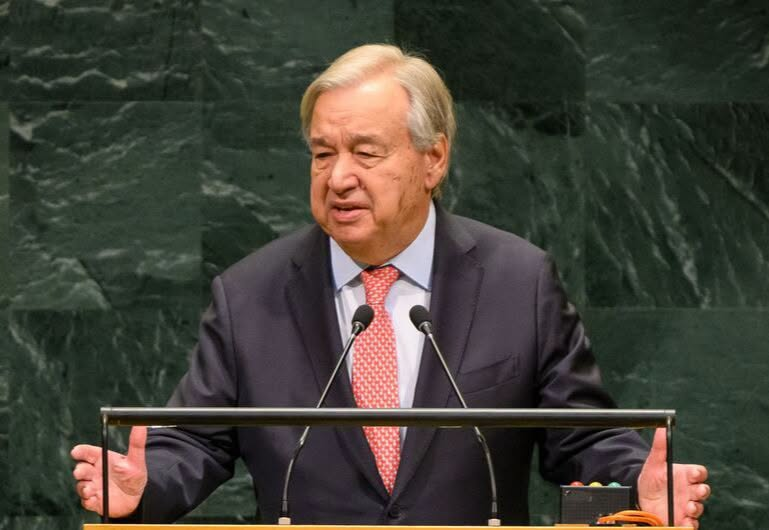
NEW YORK: United Nations Secretary-General, António Guterres, has renewed his call for urgent Security Council reform, declaring Africa’s continued absence from permanent membership “unjust and indefensible” as world leaders gather for the 81st UN General Assembly.
In a forceful statement issued Wednesday, Guterres argued that the composition of the Security Council must reflect the realities of the 21st century, rather than continue to mirror the geopolitical order that existed when the United Nations was established.
“Africa still has no permanent seat on the Security Council,” Guterres said. “A 21st century Security Council without permanent African representation is unjust and indefensible.”
He called for reform that would give the Council greater legitimacy and effectiveness in confronting contemporary global challenges.
The Secretary-General’s intervention has placed renewed diplomatic attention on one of the United Nations’ longest-running institutional reform debates, with African governments continuing to press for a permanent voice in the body responsible for maintaining international peace and security.
The Security Council currently has 15 members, including five permanent members—the United States, China, Russia, the United Kingdom and France—each holding veto power, alongside 10 non-permanent members elected for two-year terms.
Although African countries regularly serve as elected members, the continent has no permanent seat.
That imbalance has become a central issue in discussions about whether the Council adequately represents the contemporary international system.
Africa’s position is anchored in the Common African Position, principally articulated through the Ezulwini Consensus and Sirte Declaration. The African Union has called for at least two permanent seats and five non-permanent seats for Africa, with the permanent seats receiving the same prerogatives, including the veto if that power remains part of the reformed Council.
The African position also maintains that the African Union should determine which countries represent the continent in any new permanent category.
For African governments, the issue extends beyond the number of seats.
They argue that the continent’s exclusion from permanent membership represents a historical imbalance in global governance and weakens the Council’s legitimacy when it makes decisions affecting international peace, security and development.
The United Nations itself has acknowledged the need to address Africa’s underrepresentation. The Pact for the Future, adopted by world leaders, recognizes the need for a more representative Security Council and calls for addressing the historical injustice against Africa as a priority.
Guterres’ latest intervention therefore, comes as the reform process enters another critical phase of diplomatic negotiations, with member states continuing to debate the Council’s size, membership categories, veto arrangements, regional representation and working methods.
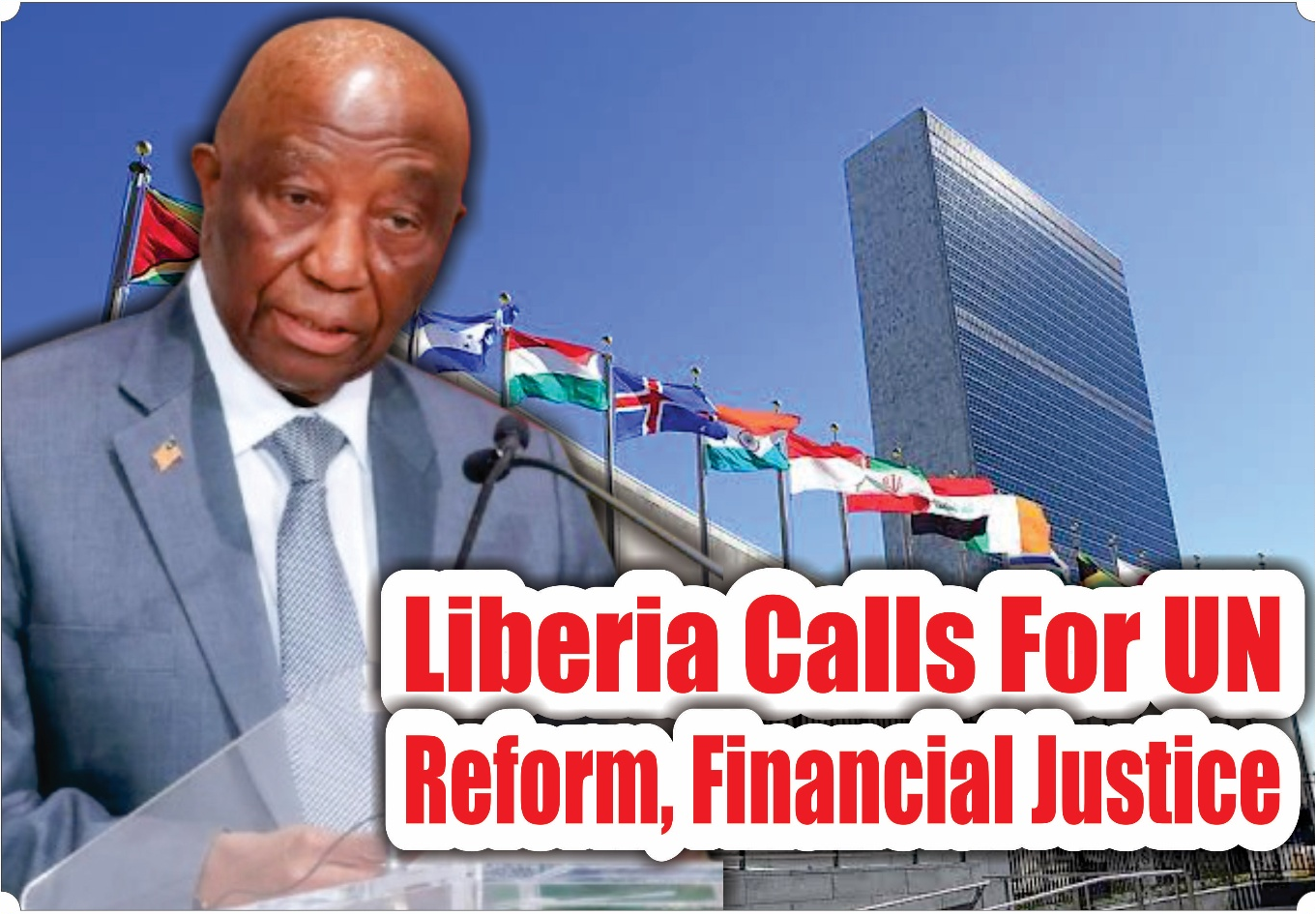
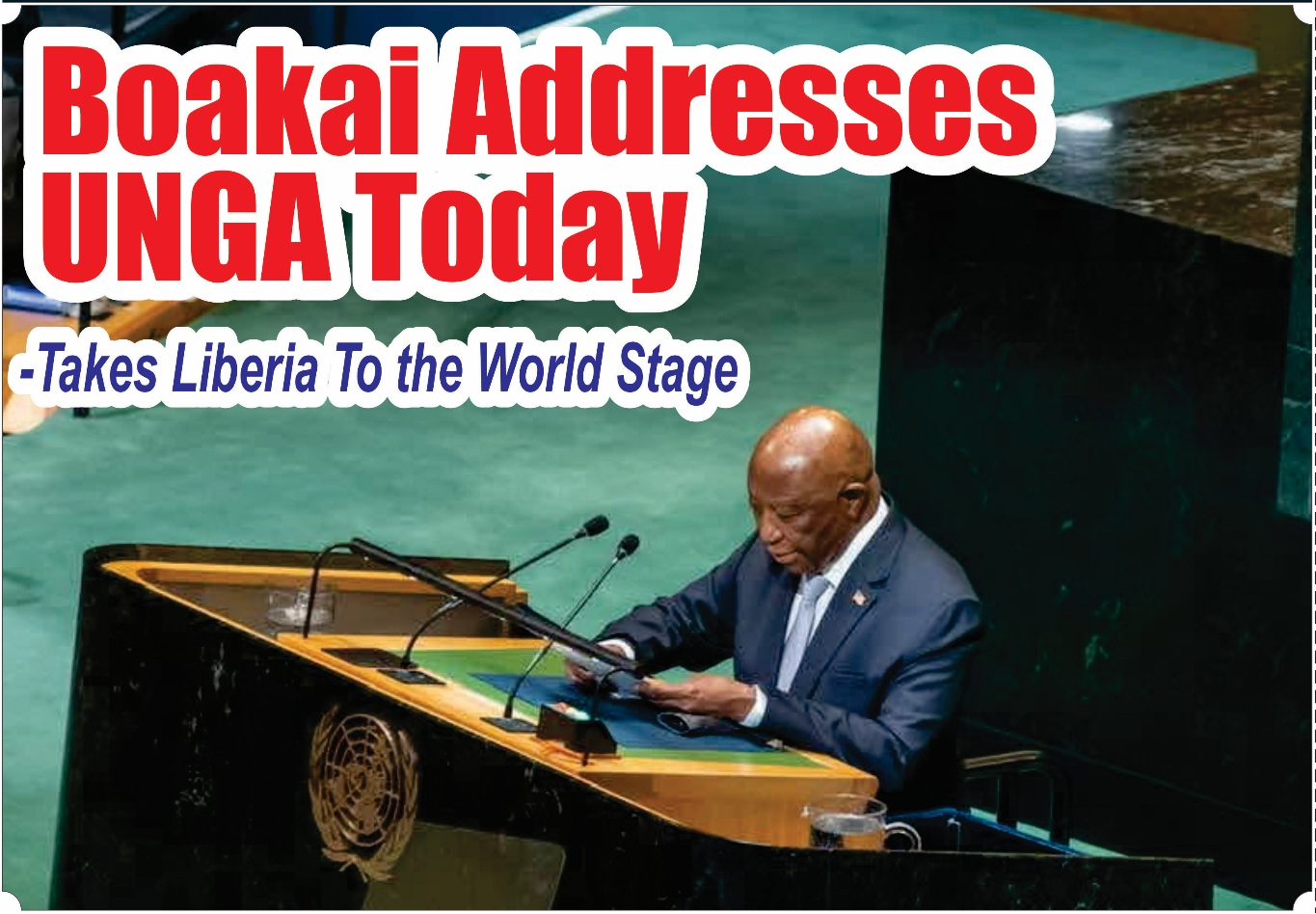
For Liberia, the issue carries particular diplomatic significance. Liberia has consistently supported the Common African Position and has called for at least two permanent African seats and five non-permanent seats in a reformed Security Council.
In its recent intervention on Council reform, Liberia argued that Africa’s participation as elected members, while important, cannot substitute for permanent representation.
Monrovia has also maintained that if the veto is retained, it should be extended to new permanent members, including African representatives.
Liberia has further emphasized that reform must respond to contemporary geopolitical realities and strengthen the Council’s legitimacy, accountability and effectiveness.
The position is particularly relevant as Liberia serves as an elected member of the Security Council for the 2026–2027 term, giving Monrovia a direct platform from which to advocate for broader African representation and institutional reform.
The renewed debate comes against a backdrop of wars, humanitarian emergencies, geopolitical rivalry, climate-related pressures and growing demands for more representative global institutions.
Supporters of the reform argue that the Council’s effectiveness depends not only on its ability to act, but also on whether countries and populations affected by its decisions regard its composition as legitimate.
Guterres has previously described the absence of permanent African representation as indefensible, telling African leaders earlier this year that the international system must reflect the realities of 2026 rather than 1946.
His latest statement reinforces that position at a moment when reform is again receiving high-level attention at the General Assembly.
Despite broad support for discussing Security Council reform, agreement on the final structure remains difficult.
Member states continue to differ over the number of additional permanent and non-permanent seats, the future of the veto, regional representation and the method by which new permanent members would be selected.
For Africa, however, the core demand remains consistent: permanent representation with meaningful powers in a reformed Council.
The African Union’s reform model explicitly calls for no fewer than two permanent seats and five non-permanent seats, while insisting that Africa be treated as a special case in the reform process.
As the 81st General Assembly progresses, Guterres’ intervention is expected to add diplomatic momentum to negotiations that have continued for decades.
The immediate challenge for member states will be converting expressions of support for a more representative United Nations into concrete agreement on the Council’s future structure.
For Africa, the issue is no longer simply about securing a seat at the table. It is about ensuring that the continent has a permanent voice in decisions that shape the international peace and security architecture.
And for the United Nations, the debate increasingly centers on whether an institution created in a different geopolitical era can be reshaped to command the legitimacy and effectiveness demanded by today’s world.

Towards Economic Empowerment And Reconciliation