By Frank P. Martin
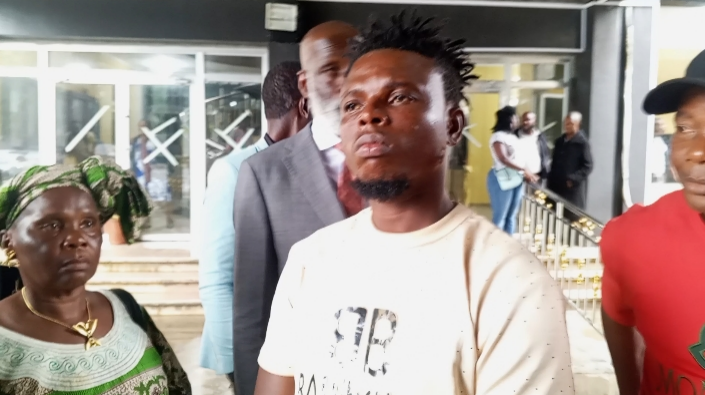
MONROVIA: Criminal Court “B” has ordered the release of cybercrime suspect, Jerry Nyantee Wrato, while summoning senior justice and police officials over his detention.
The order, issued Tuesday, September 22, followed a petition for a writ of habeas corpus filed by Wrato’s lawyer, Cllr. Garrison Doldeh Yealue Jr., challenging the legality of his continued detention by the Liberia National Police (LNP).
Criminal Court “B” Judge, Pape Suah directed that Wrato be released from police custody and turned over to his legal counsel pending further proceedings.
The judge also summoned Acting Justice Minister, Police Inspector General, Gregory O. W. Coleman and two police officers involved in Wrato’s arrest to appear before the court and respond to issues surrounding his arrest and detention.
The court’s intervention places the legality of Wrato’s detention under direct judicial scrutiny, particularly as the police had already completed its investigation and announced plans to prosecute him under Liberia’s Cybercrime Act of 2025.
The writ was signed and sealed by Amos W. Cummings, Clerk of Criminal Court “B,” on September 22, 2026. Wrato was subsequently released from police custody in compliance with the court’s order.
The judicial action came less than 24 hours after IG Coleman informed Vice President Jeremiah Kpan Koung that the LNP had concluded its investigation into allegations against Wrato and had resolved to forward the case for prosecution.
It followed Vice President Koung’s public appeal for Wrato’s release after the suspect was arrested over alleged online conduct involving the Vice President.
In a September 21 communication to the Vice President, Coleman acknowledged receiving Koung’s telephone call concerning Wrato’s arrest and his subsequent public appeal for the suspect’s release.
Coleman, however, explained that once conduct potentially constituting a criminal offense comes to the attention of law enforcement, the matter cannot necessarily be terminated solely at the request of the person allegedly affected.
According to the police, investigators reviewed the available evidence and determined that it provided sufficient grounds to refer Wrato for prosecution.
The LNP identified four alleged violations under the Cybercrime Act of 2025: misuse of devices under Section 10.1; cyberstalking under Section 15.1; distribution of data messages that incite damage to property or violence under Section 18.1; and distribution of harmful data messages under Section 19.1.
Coleman emphasized that the police decision to recommend prosecution does not constitute a determination of guilt, stressing that Wrato remains entitled to the presumption of innocence and all constitutional and statutory protections until the allegations are adjudicated by a competent court.
Wrato’s legal team moved swiftly to challenge his continued detention through a writ of habeas corpus, a legal remedy through which a detained person may ask a court to examine the lawfulness of his or her confinement.
The petition names several government and law-enforcement authorities as respondents, including the justice minister, deputy and assistant ministers of Justice, the Montserrado County Attorney and deputies, IG Coleman, the LNP Crime Service Department and other officials alleged to have custody of, or responsibility for, Wrato.
The petition invokes Article 21(f) of the 1986 Constitution of Liberia, as well as relevant provisions of the Civil Procedure Law governing habeas corpus proceedings.
Article 21(f) establishes constitutional protection against retroactive criminal laws, providing that a person cannot be subjected to a law or punishment that was not in effect when the alleged offense was committed.
The constitutional provision has become relevant to the legal challenge as the court examines the circumstances surrounding Wrato’s arrest, detention and the application of the country’s newly enacted cybercrime legislation.
The case has quickly evolved from a police investigation into a broader legal examination of the limits of detention, prosecutorial authority and the enforcement of Liberia’s cybercrime legislation.
While the police maintain that their duty is to investigate suspected criminal conduct and act on available evidence, the court’s intervention underscores the judiciary’s role in determining whether law-enforcement actions comply with constitutional and statutory requirements.
The Vice President had appealed for Wrato’s release, indicating that he did not wish to pursue charges over the alleged online content involving him.
However, the police maintained that once suspected criminal conduct comes to their attention, the matter may assume a public-law dimension beyond the wishes of an individual allegedly affected.
The court’s latest action does not determine the merits of the allegations against Wrato. Instead, it places the circumstances of his arrest and detention before the judiciary for examination.
Meanwhile, the proceedings are therefore expected to focus, among other issues, on whether the police complied with applicable legal procedures and constitutional safeguards in taking and maintaining Wrato in custody.

Towards Economic Empowerment And Reconciliation