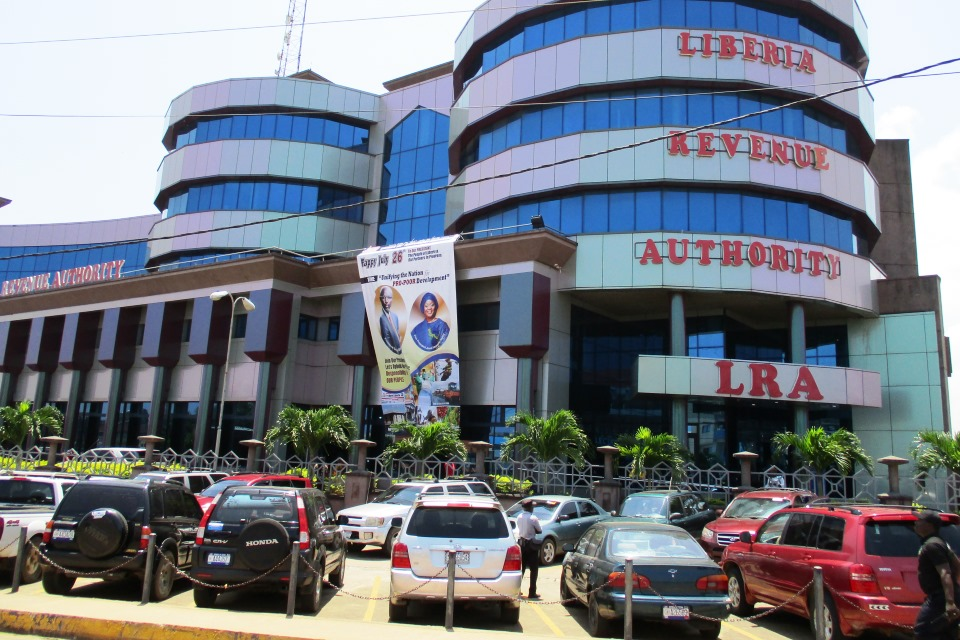
ACCRA: Liberia Revenue Authority (LRA) Commissioner General, James Dorbor Jallah, has called for deeper integration among West African tax administrations, urging regional authorities to adopt common standards, strengthen cross-border information sharing and coordinate efforts to mobilize domestic revenue.
CG Jallah made the call during the 8th West African Tax Administration Forum (WATAF) High-Level Policy Dialogue and 23rd General Assembly in Accra, Ghana, where tax administrators, policymakers, development partners and regional stakeholders gathered to discuss revenue mobilization and sustainable development.
The event, held from September 15–19, 2026, was conducted under the theme: “Building Stronger Tax Administrations for Revenue Mobilization and Sustainable Development.”
Addressing the gathering, the LRA Commissioner General said, WATAF’s next phase should move beyond cooperation and knowledge exchange toward deeper integration among tax administrations across the region.
He cited Liberia’s experience within WATAF as an example of how regional collaboration can strengthen national tax institutions and improve administrative capacity.
“Liberia’s story is, in a real sense, the WATAF story: an administration made stronger by belonging,” Jallah said.
He argued that the increasing integration of trade, capital flows, digital commerce and multinational business activities requires tax administrations to develop stronger regional mechanisms for cooperation.
“The taxpayer has integrated. The question before us is whether the tax administrator will integrate too,” he stated.
Jallah outlined four priority areas for advancing regional tax integration: a common rulebook, a shared data space, coordinated action against illicit financial flows and a unified approach to environmental taxation.
Under the proposed “one rulebook” framework, he called for greater harmonization of tax policies across West Africa, particularly in transfer pricing, tax treaties and the taxation of the digital economy.
He said, common standards could reduce revenue leakages, simplify cross-border compliance and strengthen the region’s negotiating position in international tax discussions.
On the issue of “one data space,” Jallah emphasized the importance of secure and interoperable information systems linking tax and customs administrations.
He called for stronger cross-border information exchange involving customs records, beneficial ownership information and other relevant tax data to improve compliance and support the detection of tax-related irregularities.
The LRA Commissioner General also urged West African countries to strengthen regional cooperation in combating illicit financial flows.
He identified coordinated information sharing, customs valuation and closer monitoring of mining and oil exports as areas requiring increased attention.
Jallah further called for a unified regional position in international tax negotiations, stressing that West African Countries should play a more active role in shaping global tax policies.
“The global tax rules of this decade are being written now. West Africa should not be a footnote in that text. We should be an author,” he said.
He maintained that stronger regional coordination would help countries protect their tax bases and improve their capacity to respond to increasingly complex international financial activities.
On environmental taxation, Jallah proposed a coordinated “one green frontier” approach to carbon, pollution and other environmental taxes.
According to him, regional coordination in this area could help protect West Africa’s economic competitiveness, support environmental objectives and improve access to climate finance.
The proposal reflects growing discussions around the relationship between taxation, environmental sustainability and the financing of climate-related development priorities.
Jallah also underscored the importance of domestic resource mobilization amid declining development assistance, rising debt-service obligations and climate-related pressures affecting countries across West Africa.
He said, stronger domestic revenue systems are essential to financing national development priorities and reducing vulnerabilities associated with external financing constraints.
The LRA chief urged development partners to support regional tax infrastructure through investments in shared systems, common standards and institutions capable of strengthening cooperation among national revenue administrations.
He challenged West African tax leaders to build on WATAF’s first 15 years by making the next 15 years a period of deeper institutional integration.
“Let us leave Accra having wagered even bigger, on a West Africa whose tax administrations are as integrated as its economies, as connected as its people, and as confident as its future demands,” Jallah urged.
The WATAF gathering continues to provide a platform for regional tax authorities and development stakeholders to examine strategies for improving tax administration, strengthening domestic resource mobilization and supporting sustainable development across West Africa.

Towards Economic Empowerment And Reconciliation