MONROVIA: The Government of Liberia (GOL), has reaffirmed its commitment to eliminating gender-based wage discrimination in the public service, while acknowledging the need for stronger coordination between public and private-sector labor institutions to address broader pay-equity challenges.
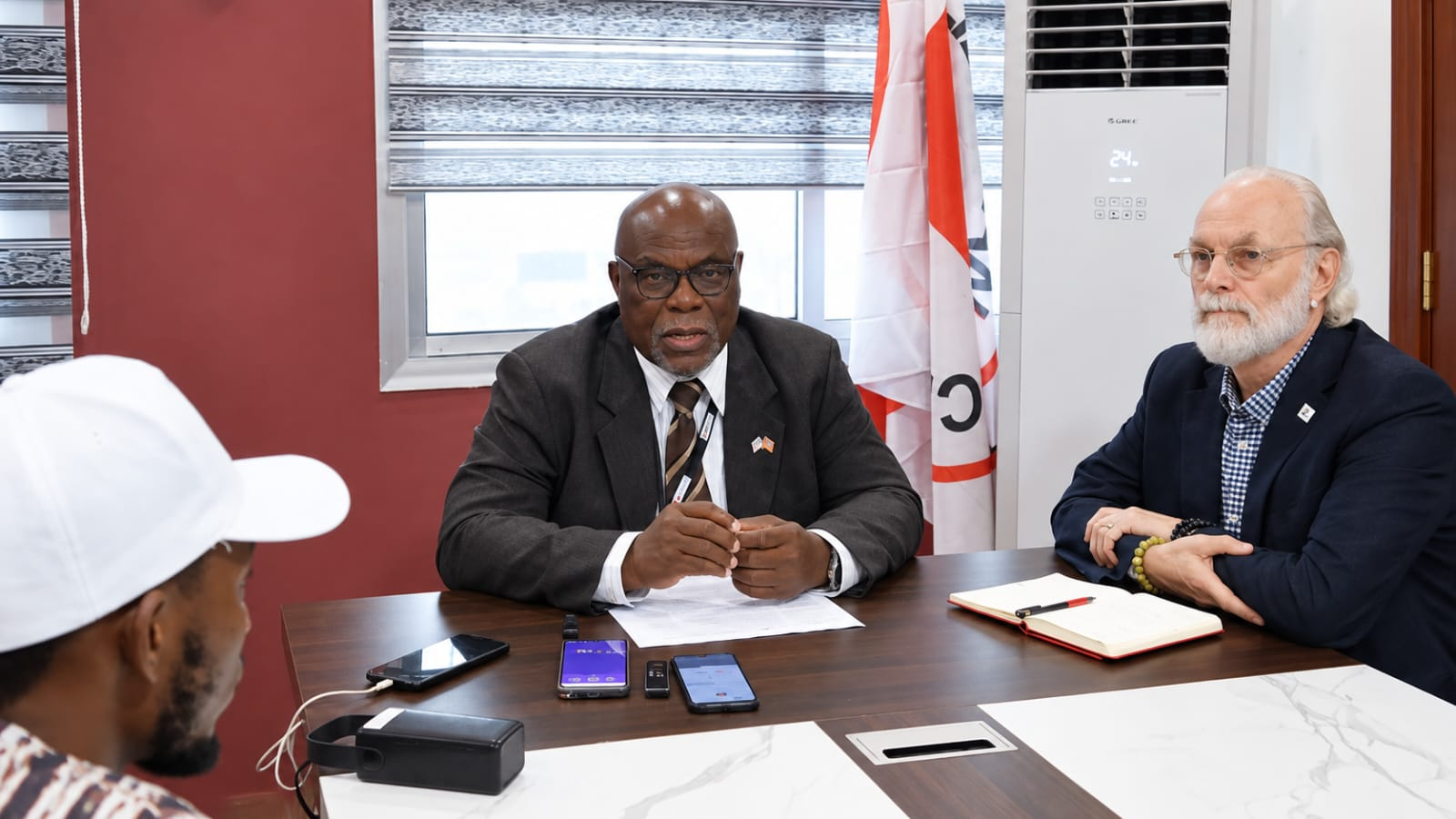
The commitment was reiterated by the Acting Director-General of the Civil Service Agency (CSA), Edwin K. Jallah, during an interview with the Liberia National Television (LNTV) in Paynesville on Friday, September 18, 2026, in observance of International Equal Pay Day.
Jallah said, the government’s wage administration framework provides for equal pay for male and female public servants performing comparable duties, stressing that gender should not determine remuneration for work of equal value.
“Whilst there remains room for improvement, the Government of Liberia is currently administering equity in wage dispensation between male and female workers. A female director in the public service is paid the same salary as her male counterpart performing similar tasks,” Jallah stated.
His remarks coincided with the global observance of International Equal Pay Day, which highlights the importance of eliminating gender-based pay disparities and promoting equitable remuneration in the workplace.
The observance builds on international efforts to advance human rights, gender equality and protection against discrimination, particularly discrimination affecting women and girls.
Jallah identified the existence of separate legal and administrative frameworks governing Liberia’s public and private sectors as a major challenge to the effective coordination of labour and wage data.
He explained that the public service operates under the Standing Orders for the Civil Service, while the private sector is governed by the Decent Work Act.
According to him, the differences between the two frameworks complicate the collection, harmonization and presentation of national labour statistics, including data used in international assessments of gender pay equity.
To address the challenge, Jallah disclosed that discussions are underway between the Civil Service Agency and the Ministry of Labour to organize a national labour conference.
The proposed conference is expected to provide a platform for stakeholders to examine labour administration, wage equity and the need for greater coordination between the public and private sectors.
Jallah said, a more harmonized approach would strengthen the country’s capacity to address wage disparities and improve the availability of reliable labour-market data.
The CSA Acting Director-General also pointed to women’s representation in senior government positions as an indication of the administration’s stated commitment to gender inclusion.
He referenced a recent disclosure by the Ministry of Gender, Children and Social Protection that approximately 47.3 percent of Cabinet-level appointments under President Joseph Nyuma Boakai Sr. are held by women.
Accroding to Jallah, greater representation of women in decision-making positions should complement efforts to eliminate discriminatory practices in remuneration and employment.
He maintained that International Equal Pay Day provides an opportunity to raise awareness and encourage practical measures toward a more equitable and inclusive workforce.
The annual observance of International Equal Pay Day is intended to draw attention to the principle of equal pay for work of equal value and encourage governments, employers and other stakeholders to address barriers to wage equality.
Jallah said, Liberia’s commitment must be supported by continued institutional improvements, effective labour administration and measures that ensure fair treatment of workers.
He also referenced the Afrobarometer 2025 report, which, according to the government’s release, places Liberia among African countries with a relatively narrow estimated gender pay gap.
However, he acknowledged that significant economic and social challenges affecting women remain.
The government’s renewed commitment therefore, places emphasis not only on maintaining equitable remuneration within the public service but also on strengthening national labour systems to promote fairness, transparency and equal opportunity across the wider workforce
Towards Economic Empowerment And Reconciliation