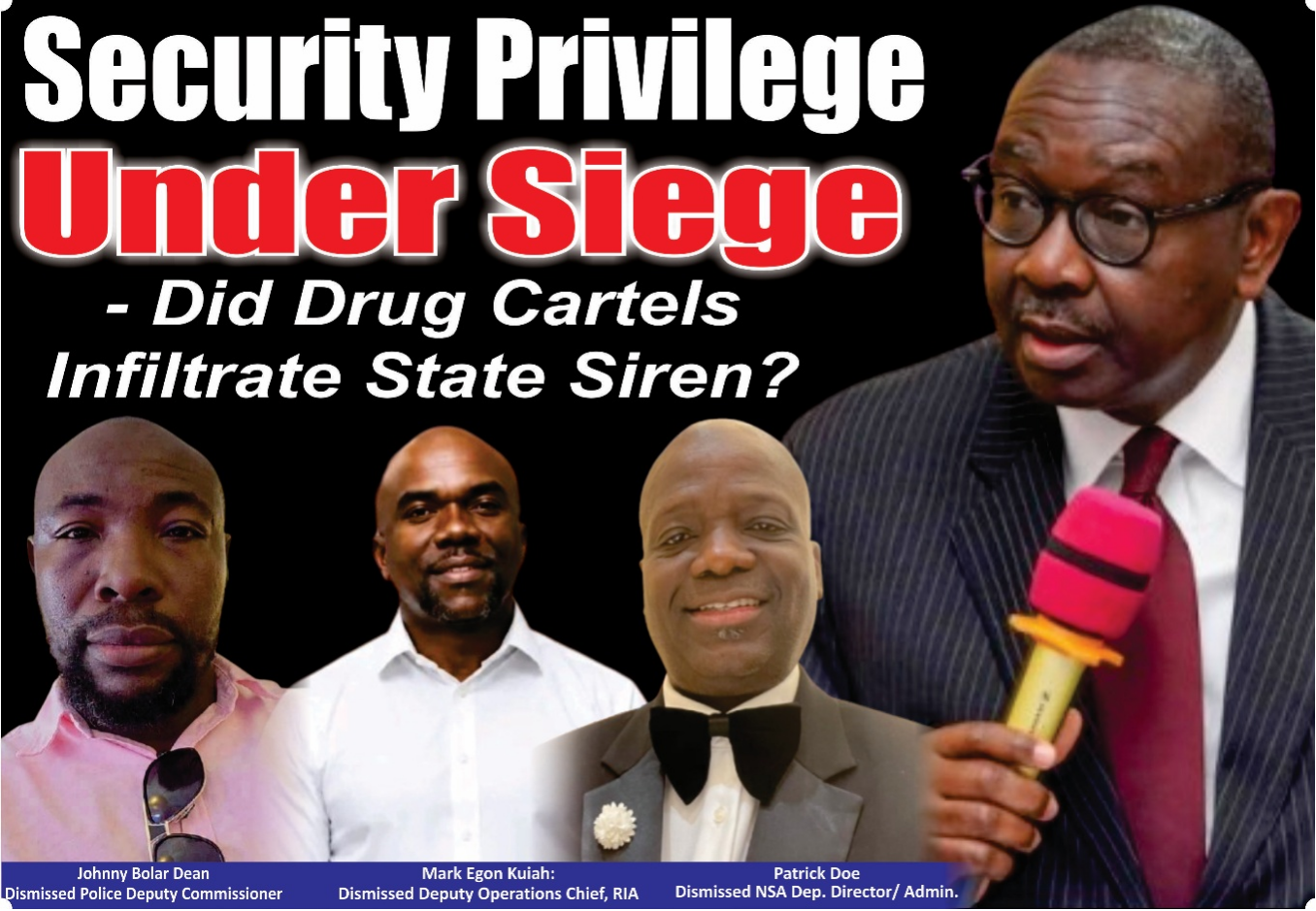
MONROVIA: The unchecked abuse of vehicle sirens in Liberia has evolved from a public nuisance into a dangerous national security threat, raising disturbing concerns that criminal syndicates and drug traffickers are exploiting emergency privileges to bypass checkpoints and undermine the country's anti-narcotics campaign. The ‘Investigative’ INDEPENDENT Newspaper Reports:
The wailing sound of a siren was once an unmistakable signal that an emergency response team, a senior government convoy, or a national security operation was in motion.
Today, however, that same sound has become a source of growing public suspicion with mounting concerns that the glaring reckless and unauthorized use of sirens is creating dangerous loopholes.
Keen observers indicate that sophisticated criminal networks are exploiting such loopholes to move illicit drugs, weapons and other contraband across countries in the subregion, with Liberia being of no exception.
The disturbing trend has become increasingly difficult to ignore amid Liberia's deepening narcotics crisis.
As law enforcement agencies intensify operations against international drug trafficking syndicates, some security experts, civil society actors and ordinary citizens are questioning whether the widespread abuse of official sirens has become a shield for organized criminal gangs.
The question is no longer whether sirens are being abused. The more troubling question is, whether marauding (prowling) drug cartels have discovered what appears to be one of Liberia's weakest security vulnerabilities.
Recently, Police Inspector-General, Gregory Coleman journalists that police vehicles were allegedly used to escort narcotics and that the cartel attempted to bribe security personnel to recover seized shipments.
IG Coleman stressed this was “not a paperwork error” but a deliberate transnational operation, and declared that Liberia “will not become a safe transit corridor” for such networks.
The Liberian police chief, however, clarified that siren privileges are strictly legal and not automatic, warning that high
level security and political figures are being probed for alleged cartel ties, with major cocaine seizures and bribery attempts forming the core of the investigation.
Across Monrovia and its immediate surroundings and, particularly on major highways, vehicles fitted with flashing lights and blaring sirens routinely force their way through traffic with little or no accountability.
Many belong neither to ambulances responding to emergencies nor to authorize VIPs convoys. Instead, they are often seen on private vehicles, politically connected convoys, commercial escorts and unofficial movements.
The culture of unquestioned deference has become so entrenched that motorists instinctively clear the road, while security officers stationed at checkpoints frequently wave such vehicles through without conducting the normal inspections required under established state security procedures.
That automatic exemption has created what one security analyst who prefers anonymity for this story described as potentially dangerous blind spot.
If a checkpoint exists to detect illegal firearms, narcotics, human trafficking or other criminal activities, critics argue that exempting certain vehicles solely because they activate a siren, defeats the very purpose of establishing those checkpoints.
Even more alarming, is the possibility that criminal organizations may have recognized and capitalized on this weakness.
Liberia has, in recent months, witnessed one of the most troubling waves of narcotics seizures in its modern history.
Massive consignments of high-grade cocaine and other illicit substances, valued in hundreds of millions of United States dollars have been intercepted by security agencies, thus exposing the country as an increasingly attractive transit corridor for international drug trafficking networks.
What investigators are still struggling to establish, is the sources and conduit the cartels often use to import the consignments and the perpetrators.
Those discoveries have shattered any illusion that Liberia is merely confronting isolated drug dealers. Instead, they point to highly organized criminal enterprises, possessing significant financial resources, sophisticated logistics and the capacity to exploit institutional weaknesses.
Against that backdrop, security observers believe, it would be dangerously naïve to assume that such organizations would ignore an obvious opportunity to evade scrutiny simply by disguising themselves as official emergency or government convoys.
A blaring siren can instantly transform suspicion into unquestioned privilege.
Checkpoint officers, often under pressure to avoid delaying senior officials or emergency responders, may hesitate to stop or search vehicles using sirens.
In some instances, officers may fear disciplinary consequences, if they mistakenly delay an authorized convoy.
Criminal networks understand psychology as much as logistics. They know that the appearance of authority often discourages inspection more effectively than concealment.
This is precisely why the unauthorized possession and reckless deployment of emergency sirens should no longer be viewed merely as a traffic violation but as a serious national security concern, another security expert who preferred anonymity hinted.
Nevertheless, the two security professionals, warned separately that every unauthorized siren represents an opportunity for criminals to exploit public trust.
The concern extends beyond narcotics. A vehicle escaping routine inspection could equally transport illegal firearms, ammunition, counterfeit currency, trafficked persons or other prohibited materials capable of threatening national stability.
Equally troubling, is the absence of consistent enforcement against individuals who illegally install or misuse emergency warning devices.
Despite widespread public complaints, unauthorized sirens continue to echo across Liberia's streets and principal highways with remarkable frequency.
Luxury SUVs, private pickups and even commercial vehicles have repeatedly been observed intimidating motorists with emergency equipment reserved exclusively for legitimate state operations.
The apparent impunity has fueled growing perceptions that the abuse enjoys what appears to be political protection or administrative indifference.
Security reform advocates argue that the government cannot credibly wage war against international drug cartels while simultaneously allowing unchecked misuse of one of the very instruments capable of facilitating criminal movement.
Every loophole left unattended eventually becomes an entry point for organized crime. “The fight against narcotics cannot rely solely on intelligence operations and high-profile seizures,” an officer who is familiar with the issue told The INDEPENDENT Newspaper over the weekend.
According to him, it must also address the smaller operational weaknesses that traffickers exploit to move illegal cargo unnoticed from one point to another. “Liberia's security architecture depends upon equal application of screening procedures.”
He urged that, no checkpoint should automatically become meaningless because a vehicle activates a siren.
Modern security systems across the world increasingly rely on verification rather than assumption.
Authorized emergency vehicles can be identified through official registration databases, designated communication channels and established operational protocols—not merely by flashing lights and loud warning devices.
Liberia must move decisively in that direction, he urged.
According to him, Law enforcement authorities should undertake a nationwide audit of all vehicles legally authorized to operate emergency sirens. Unauthorized installations should be confiscated immediately, while offenders face meaningful criminal sanctions, sufficient to deter future violations.
Checkpoint protocols may also require urgent review. He recommends that security officers should receive clear operational guidance distinguishing legitimate emergency responses from suspicious movements while ensuring that reasonable verification procedures do not unnecessarily obstruct genuine rescue operations.
Technology, training and accountability must replace assumption. Equally important, is public education.
In his view, citizens should understand that abusing emergency sirens is not simply an act of arrogance or traffic indiscipline; it potentially compromises national security and weakens Liberia's capacity to intercept dangerous criminal enterprises.
As Liberia confronts an unprecedented narcotics challenge, every vulnerability within the security system deserves careful scrutiny.
Another veteran security officer added that the sound of a siren should inspire confidence—not suspicion.
“Until authorities decisively reclaim control over who possesses and uses emergency warning devices, an uncomfortable question will continue to echo alongside every unauthorized siren racing through Liberia's streets: Is it carrying an emergency—or transporting another dangerous shipment that security officers were never given the chance to inspect?

Towards Economic Empowerment And Reconciliation