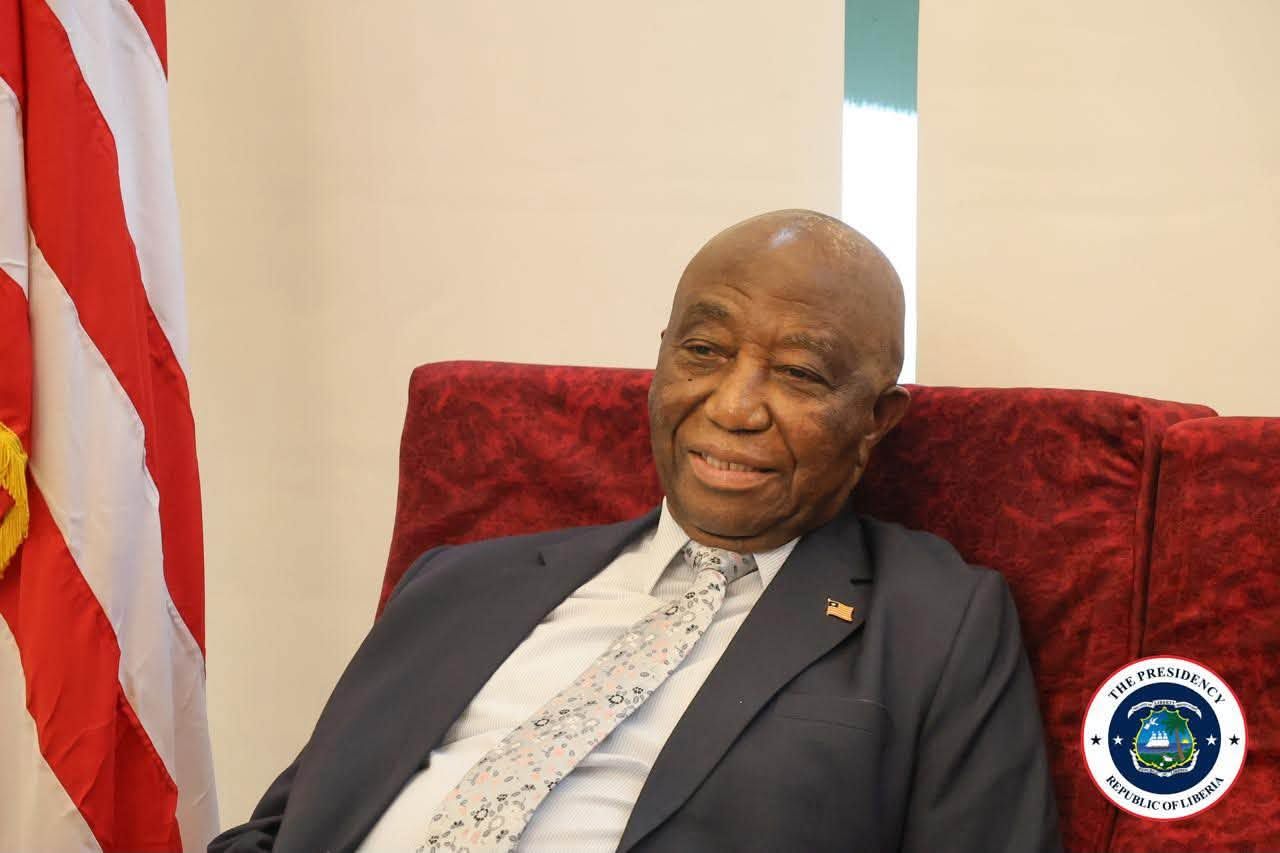
MONROVIA: President Joseph Nyuma Boakai has unleashed what some political commentators characterized as ‘the most sweeping disciplinary crackdown’ since his ascendency to the nation’s presidency, a little over three years ago.
President Boakai officially dismissed, suspended and ordered investigations into a string of government and security officials allegedly connected to Liberia's unprecedented narcotics scandal.
Yet, rather than settling public anxiety, the move has intensified a national debate over whether the administration is truly dismantling an entrenched drug syndicate or merely sacrificing officials considered critical within.
The Executive Mansion announced Thursday, July 30, 2026, that President Boakai had ordered the immediate dismissal of several top security officials following his reported review of the latest investigative report into the country's massive cocaine seizures, including the US$336 million shipment now regarded as the largest narcotics bust in Liberia's recent history.
While the administration has portrayed the decision as an unmistakable demonstration of its commitment to accountability and the rule of law, critics argue that the purge has left glaring questions unanswered.
Across Liberia and on social media, many Liberians are asking: why the disciplinary axe has fallen almost exclusively on deputy directors, commissioners, agents and operational officers, while no high-profile political appointee or top-ranking security chief has publicly been named or sanctioned.
The growing public concern has fueled speculation that the dismissed officials may be serving as "sacrificial lambs" in a scandal that many believe reaches far beyond the ranks of junior security personnel.
Political commentators argue that the narcotics trade could scarcely have expanded to such alarming proportions without protection from influential figures.
According to the Executive Mansion, President Boakai dismissed Mark Egon Kuiah, Deputy Director for Operations at the Roberts International Airport; Johnny Bolar Dean, Commissioner of Police for Criminal Investigation, Intelligence and INTERPOL; and Patrick Doe, Deputy Director for Administration at the National Security Agency.
The President also recalled Patrick Komasu (702), who had been assigned to the Liberia Drug Enforcement Agency, suspended him without pay and ordered that he be investigated.
Further dismissals targeted Mohammed O. Gbowrah, Director of Security at Roberts International Airport; and Moses Jallah, Deputy Commander of the Liberia Drug Enforcement Agency assigned at the airport.
The President additionally ordered the dismissal of Liberia National Police officers, Anthony T. Blaye and Wadell W. Kwarbo, who investigators alleged, used government vehicles to transport narcotics from Vincent Town along the Bomi Highway to the vicinity of Mega Mart in Thinker Village, Paynesville.
In what keen observers called another decisive measure, the President ordered the dismissal of National Security Agency (NSA) agents, Jammel V. Jallah, Christian L. Nyantee and Albenigo Janior, together with Caycee Nelson, Procurement Director at the Ministry of Gender, Children and Social Protection.
He further directed that they be turned over to the Ministry of Justice for prosecution.
The Executive Mansion maintained that the disciplinary actions underscore the administration's determination to ensure that no government employee engaged in criminal conduct remains in public service.
President Boakai declared that his government would enforce the law "without fear or favor" and ensure that every individual connected to narcotics trafficking is brought before the courts in accordance with due process.
He further instructed all security and law enforcement institutions to intensify their investigations, dismantle criminal networks and pursue everyone found to have participated in the illicit drug trade.
Despite those assurances, some critics say, the announcement has done little to quiet mounting public skepticism and concern as multiple questions on the illicit drugs interception remain unanswered.
Many Liberians contend that the country's drug crisis has become too sophisticated and too deeply entrenched to have flourished without any protection from influential figures, capable of manipulating state institutions.
They argue that accountability will remain incomplete unless investigators demonstrate a willingness to pursue every suspect—regardless of rank, office or political affiliation.
The controversy has become even more pronounced because, the latest dismissals come amid widening investigations into multiple cocaine seizures involving foreign nationals, airport personnel and members of Liberia's security establishment.
Those developments, critics say, have heightened demands for investigators to expose the full command structure behind the trafficking operations rather than focusing solely on operational actors.
For many observers, the defining test of the Boakai administration's anti-drug campaign is no longer whether dismissals will continue, but whether the investigation will ultimately reach the powerful individuals whom many Liberians believe have operated beyond the reach of the law.
Until those questions are answered, the President's dramatic purge is likely to remain politically explosive—hailed by supporters as a bold strike against corruption, but viewed by skeptics, as an exercise that risks creating sacrificial lambs while the alleged masterminds remain hidden behind the corridors of power.
Towards Economic Empowerment And Reconciliation