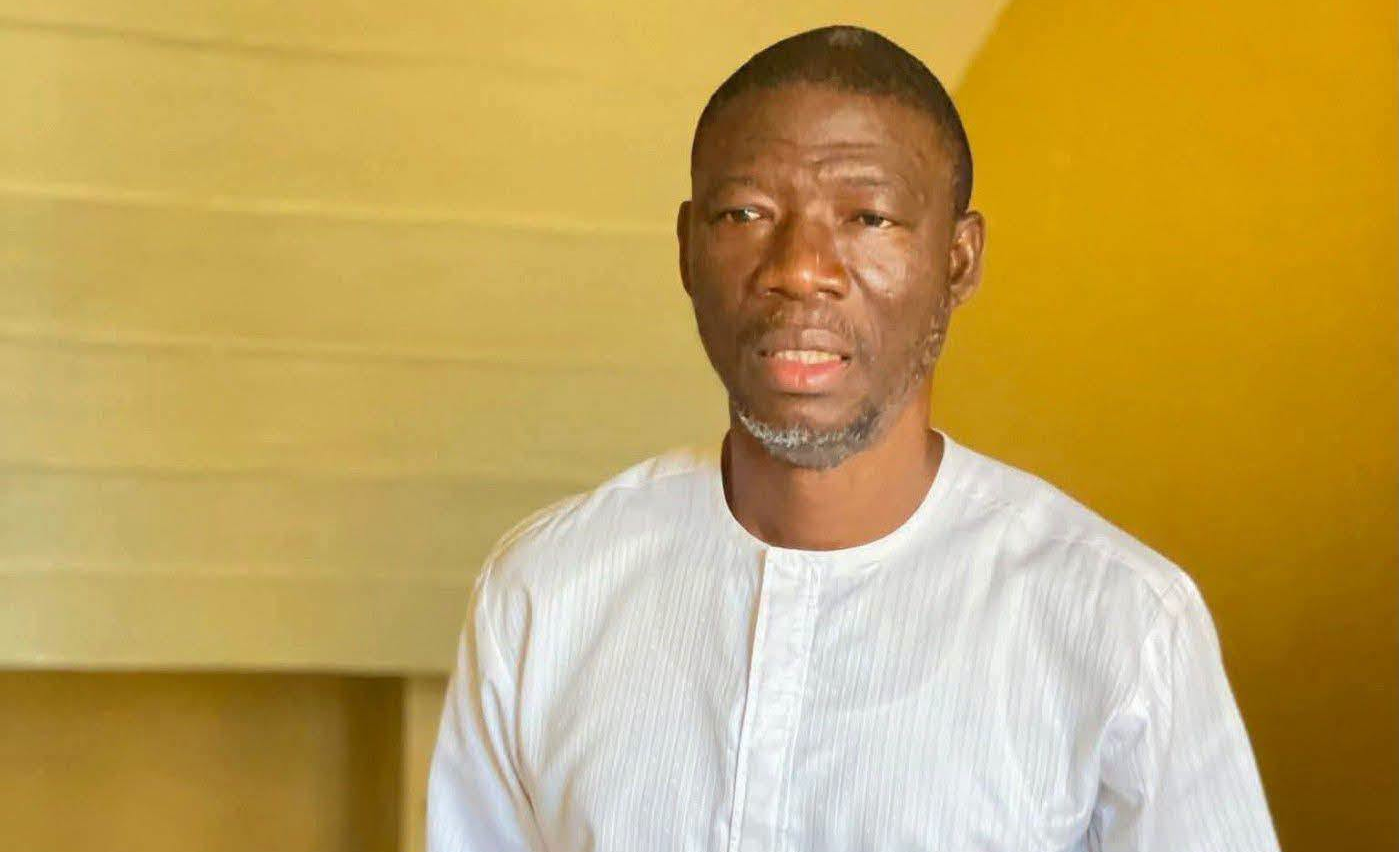
MONROVIA: Former controversial lawmaker, Yekeh Kolubah, once known for combative political rhetoric, is now calling for reconciliation and national unity, reviving questions about consistency, judgment, trust, and the durability of his advocacy.
The latest turn in Yekeh Kolubah’s political posture is already stirring debate in the country, with his call for reconciliation and dialogue with President Joseph Nyuma Boakai being viewed against a turbulent history of confrontation with the Liberian leaders and the political establishments.
Other accounts quote Kolubah as being resolute in his posture not to change his mode of criticism while seeking reconciliation with the incumbent president at the same time.
For a politician whose public identity has been built largely around confrontation, uncompromising rhetoric and fierce criticism of those in power, Kolubah’s appeal for reconciliation presents a striking change in tone.
The question now echoing through Liberia’s political circles is blunt: Is Yekeh losing substance in Liberia’s political advocacy theater—or is he simply adjusting to political reality? And perhaps even more pointedly: Can Yekeh Kolubah be trusted again?
Kolubah, former Representative of Montserrado County District #10, called on Liberians to embrace reconciliation, dialogue and national unity, arguing that prolonged political and social divisions continue to impede Liberia’s progress.
He says, the country’s lingering divisions, dating from and following the civil conflict, have contributed to difficulties in critical areas including healthcare, education, roads and infrastructure.
But his new message is attracting attention not only because of what he is saying, but because of when he is saying it.
Kolubah’s call for reconciliation comes months after his dramatic expulsion from the House of Representatives in April 2026, following a controversy over remarks concerning disputed territory along the Liberia-Guinea border.
The House voted 49–0? No—49 members endorsed the resolution, according to Liberia News Agency, resulting in his expulsion from the Legislature. The House said, his statements were unpatriotic and undermined Liberia’s sovereignty and territorial integrity.
Kolubah rejected the action and challenged it in court, arguing that the process violated due process and insisting that he remained a legitimate representative.
The expulsion created a political rupture that removed Kolubah from the institutional platform through which he had built much of his national profile. It also transformed his political circumstances.
From inside the Legislature, Kolubah had a formal constituency, a national platform and the visibility that comes with elected office. Outside the Capitol, his political influence now depends increasingly on public messaging, alliances and his ability to sustain a recognizable national constituency.
That reality gives his latest reconciliation message a significance beyond the language of unity.
‘But Boakai, That Baby?’ The political irony is difficult to overlook. Kolubah was among the outspoken critics of the Boakai administration during the period following Boakai’s inauguration.
His confrontational posture toward the government became part of his broader political identity.
Yet, reports began circulating in September that Kolubah was considering reconciliation with President Boakai.
Those reports cited his public relations officer, Samson Moseray, as saying Kolubah wanted to “mend fences and put Liberia first,” while also expressing frustration with what was described as an unserious opposition. Neither Kolubah nor the Executive Mansion had publicly confirmed that a reconciliation meeting had taken place at the time of those reports.
That distinction matters. There is a difference between calling for reconciliation and having actually reconciled. There is also a difference between political maturity and political necessity.
Kolubah’s latest statement, therefore, raises legitimate questions about whether his political philosophy has evolved or whether circumstances have forced a tactical adjustment.
Has Yekeh proven unstable in political advocacy? For years, Kolubah has cultivated an image as a politician willing to confront powerful figures regardless of the political consequences.
That image helped distinguish him from conventional politicians. But political confrontation carries a cost when it is not accompanied by a clearly defined strategy, institutional discipline and consistency of message.
His supporters describe his latest position as evidence of maturity—a recognition that national interests should transcend personal and political disagreements.
His critics, however, see the move differently: as another dramatic shift in a political career marked by confrontations, reversals and changing alliances.
Neither interpretation should be treated as established fact. What can be established is that Kolubah’s political circumstances have changed significantly since his expulsion.
The price of political isolation. The former lawmaker’s loss of his District #10 seat in Montserrado County has also altered the terrain on which he operates.
The House’s April action stripped him of his legislative position, rights, privileges, and associated benefits. The vacancy subsequently became a matter of public concern among residents of District #10.
Kolubah has continued to challenge the circumstances surrounding his removal, but his effort to return immediately to the political center has faced significant obstacles.
It would therefore be speculative to conclude that his present call for reconciliation is being driven by economic hardship.
But politically, the loss of an elected position unquestionably changes the resources, access and institutional leverage available to a former lawmaker.
That is the context in which his new posture will inevitably be judged. Can Yekeh Be Trusted Again?
The question of trust is now central. Can a politician who built his reputation on uncompromising confrontation successfully reinvent himself as a voice for reconciliation? The answer will depend less on speeches than on consistency.
If Kolubah genuinely believes that reconciliation is necessary for Liberia’s future, political observers will expect his new position to be reflected in sustained conduct—not merely a temporary change in rhetoric.
His call for dialogue will also require him to demonstrate that reconciliation does not mean abandoning legitimate political differences.
Indeed, Kolubah himself appears to recognize this distinction. He argues that reconciliation should not mean surrendering principles or ignoring legitimate disagreements.
Rather, he presents it as a willingness to pursue dialogue, cooperation and the national interest despite political differences.
That position, if consistently maintained, could provide a different chapter in his political career.
A Political Test for Yekeh. Ultimately, Kolubah is now facing a political credibility test.
The same politician who once thrived on confrontation is now asking Liberia to embrace reconciliation.
The same political environment in which he positioned himself as a fierce critic of government has now produced a message centered on dialogue.
And the same President whom Kolubah once sharply opposed is now at the center of speculation about a possible political rapprochement.
So the question is no longer merely whether Yekeh wants reconciliation. The bigger question is, whether Yekeh can sustain it.
His proposed path forward is expected to become clearer Sunday, when he has announced that further details of his position and proposed reconciliation process will be made public.
Until then, Liberia is left with an intriguing political question: Is this Yekeh’s genuine political evolution—or another turn in the unpredictable theater of Liberian politics?

Towards Economic Empowerment And Reconciliation