By: Frank P Martin
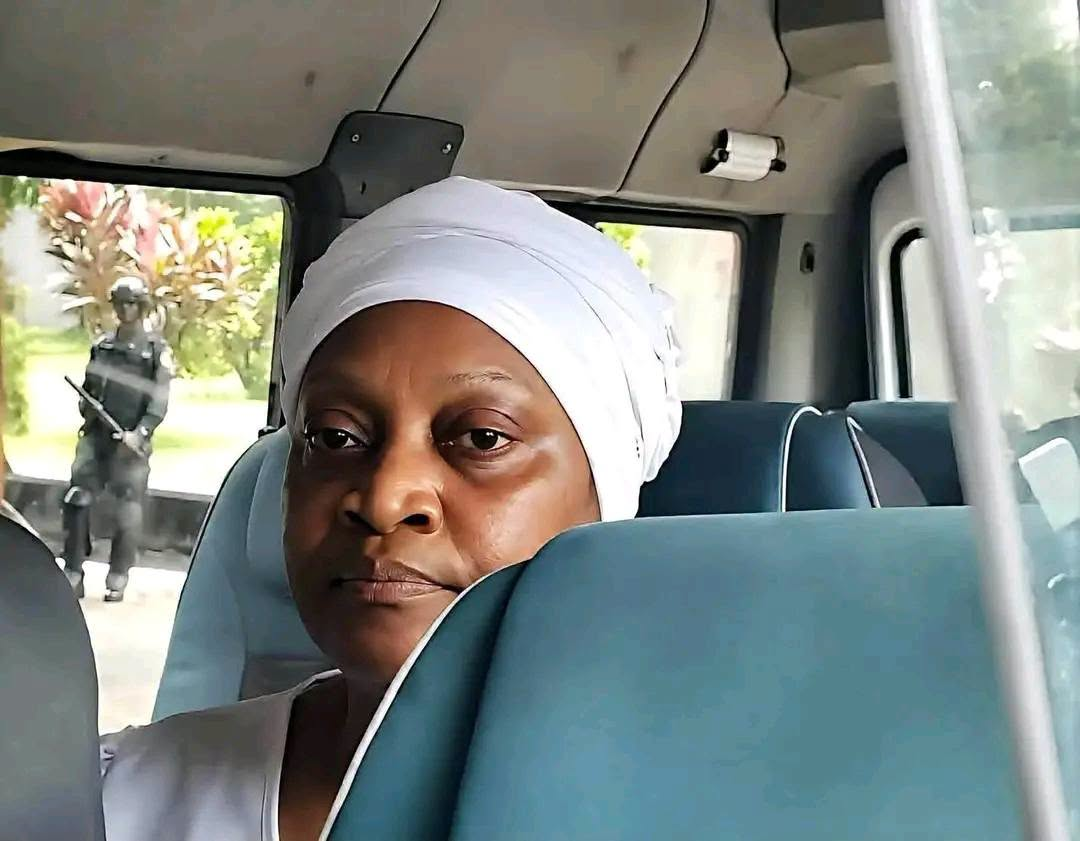
MONROVIA: Lawyers representing former Vice President, Jewel Howard Taylor, have asked Criminal Court “C” to admit their client to bail.
The lawyers’ request seems to shift the legal battle in the high-profile drug prosecution from a preliminary examination to the legality of her continued detention.
The defense is asking Judge Ousman F. Feika to release Jewel Howard Taylor either on her personal recognizance or under a bond guaranteeing her appearance throughout the legal proceedings.
The lawyers are also challenging the applicability of Liberia’s 2023 Controlled Drugs and Substances Act, arguing that the alleged conduct attributed to ex-VP Taylor occurred in 2021 and 2022, before the legislation was enacted.
The latest motion could force the court to confront a fundamental legal question: Can Jewel Howard Taylor be subjected to the bail restrictions of a 2023 law for alleged conduct said to have occurred before that law took effect?
The defense contends that the answer should be no and is asking the court to determine what law legally governed the alleged offences at the time they were supposedly committed.
With that request withdrawn, the defense has instead placed bail and the legality of Taylor’s detention at the center of the proceedings.
That question is closely tied to the defense challenge to the 2023 Controlled Drugs and Substances Act.
The lawyers argue that because the alleged conduct occurred before the 2023 law came into force, the prosecution cannot rely on provisions of the later statute to restrict Taylor’s right to bail.
The defense is therefore asking the court to examine not only whether Taylor should be released, but also whether the legal framework being applied to her detention is constitutionally and procedurally appropriate.
The government has not abandoned its prosecution of Jewel Howard Taylor.
Although Judge Feika previously ordered her release from the Monrovia Central Prison on medical grounds, the decision did not constitute an acquittal, dismissal, pardon or termination of the criminal case. She remains a defendant facing criminal charges.
The court’s September 4 decision effectively moved Taylor from incarceration to tightly controlled residential detention.
She was ordered to remain at her residence in Sinkor and could only leave under conditions approved by the court.
Judge Feika’s September 4 ruling followed competing requests concerning Taylor’s medical condition.
While Taylor’s lawyers sought her release on medical grounds, the prosecution also filed a Bill of Information supporting medical release.
The court consolidated the requests because they sought substantially similar relief.
However, Judge Feika rejected the particular statutory provision initially relied upon by the defense, Chapter 34, Section 34.20 of the Criminal Procedure Law, which deals with compassionate leave from prison.
The judge reasoned that Taylor had not been tried, convicted or sentenced and was therefore a pre-trial detainee, rather than a convicted prisoner eligible for compassionate leave under that provision.
But despite rejecting the statutory basis advanced by the defense, the judge considered the medical circumstances and the prosecution’s support for her release.
Taylor was subsequently removed from the correctional facility and placed under strict court supervision.
The conditions imposed by Judge Feika make clear that Taylor’s medical release was not unrestricted freedom.
She was ordered to surrender all travel documents to the Sheriff of Criminal Court “C”.
She must remain at her designated residence unless authorized by the court or attending an approved medical appointment.
The prosecution was directed to provide 24-hour police security at the residence.
The court also required a designated caregiver, preferably a close relative or family member, to remain with Taylor and provide daily care.
Visitors are subject to regulation, with records to be maintained and visitation controlled through an established schedule.
Taylor is also required to undergo regular medical assessments by her physician and/or doctors designated by the court.
Any violation of the conditions could result in the revocation of the release.
In practical terms, Taylor was moved from prison detention to court-supervised residential detention.
Government supports medical release, but prosecution continues.
The government’s position has produced an unusual feature of the case.
While the Republic remains the prosecuting party, the prosecution did not oppose Taylor’s medical release.
Instead, it filed its own Bill of Information seeking similar relief.
Earlier proceedings have introduced prosecution testimony concerning an alleged international cocaine-trafficking network said to involve Liberia, Nigeria and Dubai.
Among the witnesses identified in the proceedings is Rephial Wilson, Acting Commissioner of Police for the Crimes Services Division.
Wilson testified that he supervised investigators assigned to the case and that the investigation allegedly uncovered a network seeking to use Liberia as a transit point for cocaine.
According to testimony attributed to Wilson, persons allegedly connected to the network discussed securing protection from senior Liberian officials.
The witness also referred to intelligence obtained from meetings investigators said were secretly recorded and described alleged financial transactions involving substantial sums.
They have not been established as judicial findings of fact.
In particular, any suggestion that Taylor plotted to assassinate former President George Weah would require proof through admissible evidence and the full criminal process.
Taylor’s case has attracted heightened political attention because she served as Liberia’s Vice President from 2018 to 2023 under former President George Weah.
The allegations of international drug trafficking, political protection and large financial transactions have consequently generated intense public debate.
But political prominence does not determine criminal liability. The prosecution still bears the burden of proving its case in accordance with Liberian law, while Taylor remains presumed innocent unless and until proven guilty by a competent court.

Towards Economic Empowerment And Reconciliation