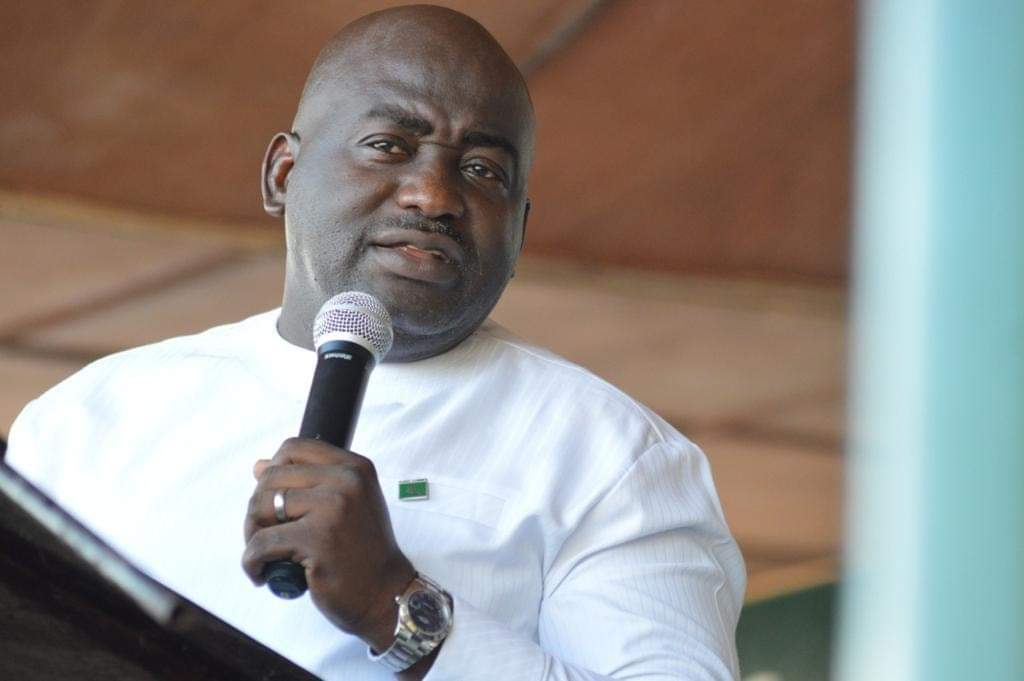
By Elbie Pannoh
MONROVIA: Former President of Liberia Football Association (LFA), Musa Hassan Bility, has broken years of silence over his FIFA ban, reigniting a fierce debate over African football’s independence, accountability and the influence of global football authorities.
Bility, a former member of the Confederation of African Football (CAF) Executive Committee, said, he feels vindicated by the controversy now surrounding FIFA leadership, arguing that concerns he raised nearly a decade ago about transparency, consultation and institutional independence have resurfaced with renewed force.
In a lengthy statement published on Facebook, Bility was careful to distinguish his sense of vindication from any personal satisfaction over the difficulties confronting FIFA President, Gianni Infantino.
“I do not celebrate another man’s difficulties,” Bility said, explaining that the unfolding controversy had compelled him to revisit events that, according to him, fundamentally altered the trajectory of African football governance.
Bility traced his political involvement in international football to the 2016 FIFA presidential election, recalling that he initially supported Prince Ali bin Al Hussein before backing Infantino in the second round following discussions with representatives of Infantino’s campaign.
He said, Liberia was among the African football associations that declined to follow the continental position at the time, choosing instead to support Infantino in the expectation that his election would usher in meaningful reforms at FIFA while giving African football greater institutional independence.
According to Bility, that optimism later helped fuel a reform movement within African football that culminated in the election of Ahmad Ahmad as CAF president in 2017.
He identified former Ghana Football Association President, Kwesi Nyantakyi, as one of the prominent figures around whom reform-minded African football officials rallied.
But Bility said, the movement began to fracture after Nyantakyi was removed from football leadership amid allegations against him. While acknowledging that others may hold different views about the allegations, Bility said, he believed Nyantakyi had been deliberately targeted.
The former LFA chief said, tensions intensified as FIFA became increasingly involved in CAF’s internal administration.
When questions emerged about CAF’s financial and administrative management under Ahmad Ahmad, Bility said, he wrote to CAF and FIFA demanding an audit.
His stated objective, he maintained, was not to protect any individual but to establish the facts and defend the integrity of the institution.
However, Bility strongly objected to the subsequent involvement of FIFA’s Secretary General in the day-to-day administration of CAF.
“For me, that was not reform. It was surrender,” he declared.
He further alleged that he was warned of consequences if he refused to support FIFA’s intervention in CAF through a vote on the CAF Executive Committee.
“I am not a coward. FIFA can do whatever it wants to me. I will take my punishment and go, but I will not surrender African football,” Bility recalled telling the person who, he said, delivered the warning.
FIFA subsequently sanctioned Bility over matters dating back several years. He said, he challenged both the findings and the rules applied in his case, but his appeal was unsuccessful.
Despite maintaining his innocence, according to him, he accepted the punishment and endured what he described as the humiliation and stigma associated with being publicly condemned.
He also pointed to a subsequent audit conducted by the Liberia Football Association, saying, the association formally informed him that it owed him money.
While acknowledging that the audit did not overturn FIFA’s disciplinary decision, Bility said, it offered what he considers a significantly different account of the circumstances surrounding the dispute.
“What hurt me most, was not only the action taken against me. It was the silence of African football,” he said.
However, he contended that fear silenced other African football officials and allowed what he described as a reform movement to collapse.
He characterizes that period as a broader struggle over the independence of African football, arguing that FIFA’s growing influence over CAF weakened the continent’s ability to determine its own institutional direction.
“Our revolution was hijacked,” he declared, describing the development as a form of “recolonization” driven not by military force, but by money, dependency, fear and institutional control.
His criticism extends to CAF’s reported support for Infantino amid the latest controversy surrounding FIFA leadership.
Bility questioned whether the CAF Executive Committee had obtained a mandate from all 54 African member associations before issuing a position on an issue of such continental significance.
He argued that matters affecting the collective interests of African football should be subjected to broader consultation, including an emergency meeting or Extraordinary Congress, where all 54 associations could examine the facts and determine the continent’s position.
“An Executive Committee statement is not the same as a mandate from the 54 African member associations,” Bility clarified.
He also warned African football leaders against allowing financial assistance from FIFA to become a substitute for institutional independence.
“Money tied to political obedience is not development. It is dependency,” he argued, noting that genuine development must instead focus on strengthening domestic leagues, academies, coaching structures, women’s football, stadium and training infrastructure, youth development and the commercial sustainability of African football.
He further argued that African football’s international successes have often been driven by players who developed professionally outside the continent before returning to represent their national teams, underscoring what he considers, the need for stronger football ecosystems at home.
Despite the bitterness surrounding his FIFA ban, Bility said, his intervention was not motivated by revenge.
“I do not seek revenge. I seek the liberation of football,” he declared.
He called on CAF to reconsider its reported endorsement of Infantino and consult its 54 member associations before taking major positions affecting African football.
Bility insisted that individual football executives must never be confused with the institutions or people they serve.
“Gianni Infantino is not FIFA. The CAF Executive Committee is not Africa. Football belongs to the people,” he said.
His intervention effectively reopens a chapter of African football politics that has remained contentious for years, placing his FIFA ban, the independence of CAF and the relationship between African football authorities and FIFA back into public debate.
For Bility, however, the issue is bigger than his own disciplinary history. It is a question of whether African football can build institutions strong enough to negotiate with global governing bodies without surrendering its autonomy.
The former LFA president said, he hopes to return to football service someday without bitterness or fear, maintaining that although his football journey was interrupted, his convictions have not changed.
“Our revolution was hijacked once. We must never allow it to be hijacked again,” Bility said, calling for a renewed effort to “rebrand African football without fear.”

Towards Economic Empowerment And Reconciliation